4. Safe and Secure Workplace
Quanta firmly believes that "talent" is the most critical asset of an enterprise and is dedicated to fostering a safe, healthy, and growth-oriented work environment. The Company strives to enable employees to fully realize their potential in an atmosphere of stability, respect, and support. The Company continuously optimizes labor-management communication mechanisms and promotes a diverse and inclusive culture. Through institutionalized management and multiple channels, it enhances employees' sense of participation and belonging. In terms of health and safety, Quanta complies with local regulations and international standards, implements occupational safety and health systems as well as health promotion programs. The Company also provides psychological counseling and localized support services, ensuring holistic protection of employee well-being and delivering on its commitment to a sustainable workplace.
4.1 Human Capital Development
Talent is the driving force behind sustainable growth. In response to rapid global changes and the challenges of digital transformation, Quanta embraces the philosophy of "Nurturing Talent, Unlocking Potential, and Co-creating Value." The Company continually refines its human resource strategies to build a resilient and competitive organization. A comprehensive talent development framework has been established, covering targeted recruitment, equitable performance management, diversified competency development, and cross-regional training platforms. These initiatives foster a challenging and rewarding career environment, supporting employees at every stage in realizing their full potential.
At the same time, Quanta actively promotes inclusion and equality, advocates gender equity and diversity, and integrates employee care into sustainable governance. Through health promotion, work-life balance, engagement initiatives, and welfare systems, the Company strengthens both employee well-being and organizational cohesion.
4.1.1 Diversity and Inclusion
Talent Gathering and Innovation, Diversity and Sustainability
Quanta u Quanta upholds the principles of "people-oriented management," "respect for diversity," and "equal opportunity." Diversity and inclusion are regarded as essential pillars of sustainable development and innovative growth. In compliance with the Labor Standards Act, Gender Equality in Employment Act, Protection of the Rights and Interests of Persons with Disabilities Act, Universal Declaration of Human Rights (UDHR), International Labor Organization Declaration on Fundamental Principles and Rights at Work, Women's Empowerment Principles (WEPs), and the Responsible Business Alliance Code of Conduct (RBA), Quanta implements diversity and inclusion strategies across gender, age, race, religion, nationality, sexual orientation, marital status, and physical and mental attributes. The key focus areas for the implementation of Quanta's Diversity and Inclusion policy are as follows:
- Institutional: Establish a work environment free from discrimination and harassment, fully implement the principle of equal pay for equal work, and incorporate equal opportunity into the design of talent recruitment, appointment, promotion, and compensation systems.
- Cultural: Through internal education and training, open communication platforms, and management training, enhance the understanding and support of all employees for multiculturalism and inclusive values, fostering an organizational culture that respects differences and promotes a collaborative and inclusive environment.
- Action: Implement a cross-generational and interdisciplinary career development mechanism to promote knowledge transfer and collaborative innovation. Additionally, collaborate with global academic and research institutions to attract diverse talents, thereby enhancing corporate resilience and competitiveness.
Stable and Robust Talent Capital
To implement its diverse and inclusive talent management strategy, Quanta continuously conducts regular assessments of structural indicators such as employees' age, gender, and contract types across the group, in order to identify potential risks and opportunities for sustainable human resource development. As of the end of 2024, Quanta employed a total of 64,935 people worldwide. Due to the impact of geopolitical factors and adjustments to product line strategies, the number of employees in China significantly decreased between 2021 and 2023. Overall workforce allocation has gradually shifted toward Southeast Asia, Europe, and the United States, demonstrating the Group's organizational flexibility in response to its global deployment.
From the perspective of age structure, Quanta categorizes its employees into three main age groups: under 30 years old (exclusive), 30 to 50 years old, and over 50 years old (exclusive). In 2024, employees under 30 became the largest demographic segment, surpassing the 30 to 50 age group that had been predominant in 2023, underscoring the Company's success in attracting and developing young talent. The proportion of employees aged 51 and above has also steadily increased, reflecting the Company's emphasis on experience transfer and generational balance, thereby laying a solid foundation for industry stability and technological advancement. Regarding gender composition, while the technology industry tends to have a higher proportion of male employees due to academic and research backgrounds as well as the nature of certain job functions, the Company has actively promoted gender equality since 2021. The employee gender ratio has decreased annually from 1.9 (male to female) to 1.6 in 2024, indicating a gradual increase in female talent participation and the initial achievement of workplace gender diversity.
Looking ahead, Quanta will continue to monitor employee turnover rates, promotion opportunities, and the allocation of training resources across all age groups. The Company aims to strengthen the foundation of its sustainable human resources strategy and promote cross-generational and cross-cultural collaborative resilience, thereby building a more inclusive and competitive organizational environment.
Total Number of Employees
| Asia Region | ||||||||||
|---|---|---|---|---|---|---|---|---|---|---|
| Employee Headcount Statistics | Full-time/Contract | Dispatch/ Labor Services | Interns | Total Employees | ||||||
| Local Employees | Foreign Migrant Workers | |||||||||
| Male (Number) | Female (Number) | Male (Number) | Female (Number) | Male (Number) | Female (Number) | Male (Number) | Female (Number) | |||
| 2021 | (A)Under 30 Years Old | 25,403 | 11,435 | 89 | 287 | 2,955 | 2,686 | 5,392 | 2,468 | 50,715 |
| (B)Ages 30-50 | 20,054 | 10,645 | 143 | 121 | 801 | 1,391 | – | – | 33,155 | |
| (C)Over 50 Years Old | 699 | 195 | – | – | – | – | – | – | 894 | |
| Subtotal | 46,156 | 22,275 | 232 | 408 | 3,756 | 4,077 | 5,392 | 2,468 | 84,764 | |
| 2022 | (A)Under 30 Years Old | 18,722 | 9,252 | 178 | 601 | 1,652 | 2,120 | 2,649 | 1,515 | 36,689 |
| (B)Ages 30-50 | 18,003 | 9,706 | 190 | 228 | 291 | 378 | – | – | 28,796 | |
| (C)Over 50 Years Old | 809 | 240 | – | – | 1 | 1 | – | – | 1,051 | |
| Subtotal | 37,534 | 19,198 | 368 | 829 | 1,944 | 2,499 | 2,649 | 1,515 | 66,536 | |
| 2023 | (A)Under 30 Years Old | 13,014 | 7,105 | 137 | 480 | 769 | 1,446 | 1,456 | 1,211 | 25,618 |
| (B)Ages 30-50 | 16,463 | 9,157 | 212 | 307 | 123 | 205 | – | – | 26,467 | |
| (C)Over 50 Years Old | 956 | 278 | – | – | – | – | – | – | 1,234 | |
| Subtotal | 30,433 | 16,540 | 349 | 787 | 892 | 1,651 | 1,456 | 1,211 | 53,319 | |
| 2024 | (A)Under 30 Years Old | 14,140 | 8,840 | 99 | 372 | 607 | 385 | 992 | 436 | 25,871 |
| (B)Ages 30-50 | 18,556 | 10,672 | 236 | 365 | 315 | 234 | – | – | 30,378 | |
| (C)Over 50 Years Old | 1,258 | 518 | – | – | – | – | – | – | 1,776 | |
| Subtotal | 33,954 | 20,030 | 335 | 737 | 922 | 619 | 992 | 436 | 58,025 | |
| Americas Region | ||||||||||
|---|---|---|---|---|---|---|---|---|---|---|
| Employee Headcount Statistics | Full-time/Contract | Dispatch/ Labor Services | Interns | Total Employees | ||||||
| Local Employees | Foreign Migrant Workers | |||||||||
| Male (Number) | Female (Number) | Male (Number) | Female (Number) | Male (Number) | Female (Number) | Male (Number) | Female (Number) | |||
| 2021 | (A)Under 30 Years Old | 43 | 27 | 1 | – | – | – | – | – | 71 |
| (B)Ages 30-50 | 8 | 9 | – | – | – | – | – | – | 17 | |
| (C)Over 50 Years Old | 1 | – | – | – | – | – | – | – | 1 | |
| Subtotal | 52 | 36 | 1 | – | – | – | – | – | 89 | |
| 2022 | (A)Under 30 Years Old | 687 | 415 | 3 | – | – | – | – | – | 1,105 |
| (B)Ages 30-50 | 121 | 277 | 3 | 5 | – | – | – | – | 406 | |
| (C)Over 50 Years Old | 4 | – | 1 | – | – | – | – | – | 5 | |
| Subtotal | 812 | 692 | 7 | 5 | – | – | – | – | 1,516 | |
| 2023 | (A)Under 30 Years Old | 789 | 458 | 23 | 11 | – | – | – | – | 1,281 |
| (B)Ages 30-50 | 129 | 296 | 41 | 12 | – | – | – | – | 478 | |
| (C)Over 50 Years Old | 1 | 1 | 3 | – | – | – | – | – | 5 | |
| Subtotal | 919 | 755 | 67 | 23 | – | – | – | – | 1,764 | |
| 2024 | (A)Under 30 Years Old | 2,192 | 1,480 | 9 | 1 | – | – | – | – | 3,682 |
| (B)Ages 30-50 | 1,047 | 1,482 | 6 | 2 | – | – | – | – | 2,537 | |
| (C)Over 50 Years Old | 288 | 251 | 2 | 1 | – | – | – | – | 542 | |
| Subtotal | 3,527 | 3,213 | 17 | 4 | – | – | – | – | 6,761 | |
| Europe Region | ||||||||||
|---|---|---|---|---|---|---|---|---|---|---|
| Employee Headcount Statistics | Full-time/Contract | Dispatch/ Labor Services | Interns | Total Employees | ||||||
| Local Employees | Foreign Migrant Workers | |||||||||
| Male (Number) | Female (Number) | Male (Number) | Female (Number) | Male (Number) | Female (Number) | Male (Number) | Female (Number) | |||
| 2021 | (A)Under 30 Years Old | 17 | 9 | – | – | – | – | – | – | 26 |
| (B)Ages 30-50 | 45 | 28 | – | – | – | – | – | – | 73 | |
| (C)Over 50 Years Old | 15 | 7 | – | – | – | – | – | – | 22 | |
| Subtotal | 77 | 44 | – | – | – | – | – | – | 121 | |
| 2022 | (A)Under 30 Years Old | 18 | 7 | – | – | – | – | – | – | 25 |
| (B)Ages 30-50 | 52 | 35 | – | – | – | – | – | – | 87 | |
| (C)Over 50 Years Old | 15 | 6 | – | – | – | – | – | – | 21 | |
| Subtotal | 85 | 48 | – | – | – | – | – | – | 133 | |
| 2023 | (A)Under 30 Years Old | 15 | 2 | – | – | – | – | – | – | 17 |
| (B)Ages 30-50 | 51 | 36 | – | – | – | – | – | – | 87 | |
| (C)Over 50 Years Old | 19 | 10 | – | – | – | – | – | – | 29 | |
| Subtotal | 85 | 48 | – | – | – | – | – | – | 133 | |
| 2024 | (A)Under 30 Years Old | 23 | 3 | – | – | – | – | – | – | 26 |
| (B)Ages 30-50 | 48 | 41 | – | – | – | – | – | – | 89 | |
| (C)Over 50 Years Old | 24 | 10 | – | – | – | – | – | – | 34 | |
| Subtotal | 95 | 54 | – | – | – | – | – | – | 149 | |
- Note 1: The disclosed headcount covers the following manufacturing sites: QCI, QSMC, QCMC, QMB, QMH, QMN, QMF, QCG, and QMMC.
- Note 2: The personnel summary includes regular employees (both local and foreign migrant workers), dispatch/labor service workers, and interns.
- Note 3: For information on non-employee workers, please refer to Section 4.2.2 Occupational Safety and Health: Non-Employee Workers.
- Note 4: Data reference point: Number of employees in service at the end of each year.
In addition, to implement the concepts of gender equality and diversity and inclusion, the Company continuously monitors the representation of female employees and women in managerial roles across its global operations. According to statistics, from 2021 to 2024, the number of women in management positions worldwide has grown steadily, demonstrating the Company's proactive efforts to enhance female leadership. At the entry and mid-management levels, female employees have maintained a stable proportion, underscoring the Company's ongoing commitment to fostering a supportive work environment and family-friendly policies. These measures encourage women to pursue careers in both technical and managerial fields, while advancing the Company's broader goals of diversity and inclusion.
Proportion of Female Employees at Various Levels
| Distribution of Female Employees | 2021 | 2022 | 2023 | 2024 |
|---|---|---|---|---|
| Proportion of Female Employees | 34% | 42% | 38% | 39% |
| Proportion of Female Junior Managers | 27% | 27% | 28% | 28% |
| Proportion of Female Mid-Level Managers | 17% | 17% | 17% | 17% |
| Proportion of Female Senior Managers | 11% | 11% | 11% | 11% |
| Proportion of Female Employees in STEM Positions | 23% | 23% | 23% | 24% |
- Note 1: The disclosed headcount covers the following manufacturing sites: QCI, QSMC, QCMC, QMB, QMH, QMN, QMF, QCG, and QMMC.
- Note 2: This table includes regular employees (both local and foreign migrant workers), dispatch/ labor service workers, and interns.
- Note 3: Definition of STEM Personnel: Research and Development (R&D) staff, and Information Management and Technology personnel (MIS or IT), limited to regular employees (including both local and foreign migrant workers).
- Note 4: Calculation formula: (Total Number of Female STEM Employees ÷ Total Number of STEM Positions) × 100%
- Note 5: Data reference point: Number of employees in service at the end of each year.
Quanta complies with labor laws and international human rights conventions, such as the "Labor Standards Act" and the ILO's "Declaration on Fundamental Principles and Rights at Work" and strictly prohibits any form of discrimination based on ethnicity, skin color, or language. Its workforce is composed of employees from diverse nationalities and cultural backgrounds, reflecting the Group's global presence and its human resource strategy of fostering local integration. Looking ahead, Quanta will continue to enhance its internal demographic tracking and equality mechanisms, establishing a strong foundation for advancing a culture of diversity and inclusion.
2024 Annual Total Number of Employees and Classification by Nationality
| Region | Asia | Americas | Europe | |||
|---|---|---|---|---|---|---|
| Nationality | % of Total Workforce | % of Total Managerial Positions | % of Total Workforce | % of Total Managerial Positions | % of Total Workforce | % of Total Managerial Positions |
| Taiwan | 17.86% | 79.89% | 1.99% | 22.22% | 4.70% | 0.00% |
| China | 65.28% | 19.86% | 2.09% | 11.11% | 5.37% | 8.33% |
| Thailand | 11.87% | 0.11% | 0.00% | 0.00% | 0.00% | 0.00% |
| Vietnam | 3.03% | 0.06% | 0.25% | 0.00% | 0.00% | 0.00% |
| Philippines | 1.93% | 0.02% | 0.00% | 0.00% | 0.67% | 0.00% |
| United States | 0.00% | 0.02% | 21.81% | 60.00% | 0.00% | 0.00% |
| Germany | 0.00% | 0.00% | 0.00% | 0.00% | 49.66% | 83.33% |
| Mexico | 0.00% | 0.00% | 69.11% | 6.67% | 0.00% | 0.00% |
| Others | 0.03% | 0.04% | 4.75% | 0.00% | 39.60% | 8.33% |
- Note 1: Nationality Classification of Employees at Year-End for the Most Recent Year (2024)
- Note 2: Management positions refer to all junior, mid-level, and senior management personnel.
- Note 3: Calculation formulae: (Number of employees of a specific nationality ÷ Total number of employees) × 100% (Number of management personnel of a specific nationality ÷ Total number of management personnel) × 100%
Proportion of senior management hired from the local community
In recent years, Quanta has continued to expand its operational presence and establish manufacturing facilities in various locations to support business growth. During the initial construction phase, the Company deploys personnel who are well-versed in its culture and management strategies as the first advance team overseas. As operations mature, Quanta cultivates local talent to become an integral part of its management team. As for the parent company QCI, the proportion of senior management hired from the local community has reached 99.4%.
Recruitment and New Employee Development Strategy
Quanta recognizes that exceptional talent is the core driver of sustainable corporate growth. In response to rapidly evolving global business challenges and the increasing diversity of work models, the Company is committed to building a recruitment and development framework founded on fairness, inclusiveness, and forward-thinking principles. From strategic planning and talent acquisition channels to employment security measures, Quanta works comprehensively to enhance organizational resilience and strengthen talent competitiveness.
A. Principles for Diverse and Equitable Talent Selection
Quanta upholds the core principle of "talent-based employment," adhering strictly to hiring standards based on academic and professional qualifications aligned with job requirements. The Company does not discriminate based on nationality, gender, sexual orientation, physical or mental condition, or regional background, thereby ensuring a recruitment process founded on fairness and inclusivity. Each year, the recruitment team formulates an annual recruitment strategy based on the Company's business direction and the actual needs of each department. This strategy integrates campus collaboration programs, employer brand management, and resource allocation to effectively attract outstanding talents who identify with the corporate culture to join Quanta.
B. Promoting Disability-Inclusive Employment
In terms of diversity and inclusion, the Company continues to foster a workplace environment that is welcoming and supportive of persons with disabilities. In 2024, the Company launched the "Employment Project for Persons with Disabilities", collaborating with local labor authorities to identify and refer suitable candidates. A dedicated recruitment channel was established, with specialized personnel providing job matching and interview arrangements tailored to the specific needs of each candidate. Additionally, to further safeguard the rights of persons with disabilities, Quanta promoted the dedicated "Employment Project for Persons with Disabilities" in 2024. In addition to actively collaborating with local labor authorities to refer qualified candidates, the Company established a dedicated recruitment section for applicants with disabilities. Specialized staff assist in matching applicants to suitable positions and arranging interviews based on their specific needs. Measures have also been implemented to assist employees with disabilities in commuting to and from work, such as providing priority parking spaces and dedicated transportation services, to reduce the inconvenience caused by transportation barriers and to ensure their equal rights to participate fully in the workplace. As of the end of 2024, QCI employed a total of 106 persons with disabilities, and QSMC employed 11. Other manufacturing sites also arranged job placements according to operational needs. Although the number of hires was below the quota, efforts were still made to create an accessible work environment. For overseas facilities, the tracking and reporting system is still under development. Data collection and management processes will be progressively enhanced in subsequent phases, with the aim of achieving comprehensive oversight of global employment conditions and continuing to advance inclusive employment policies.
C. Deepening Campus Talent Connections
Quanta actively expands its connections with the younger generation by participating annually in the Spring Job Fair and the Autumn R&D Alternative Service Recruitment events, enhancing employer brand recognition and engagement with young talent. Colleagues also serve as career mentors for the school, providing resume review and career consultation services to enhance students' understanding of corporate culture and career development opportunities. In 2024, Quanta collaborated with National Taiwan University to launch the "Taiwan Pathfinder Program". Through this internship program, it aims to cultivate potential talent in advance and deepen the new generation's recognition of and commitment to Quanta.
D. Encourage Internal Referrals to Strengthen Talent Networks
To effectively broaden recruitment channels, the Company encourages employees to proactively refer friends and family, supported by a referral bonus program. This approach leverages internal trust networks to enhance recruitment efficiency, while positioning every employee as an ambassador for the employer brand.
E. Cultivating Future Key Executive Talent
Quanta annually conducts a Management Associate (MA) recruitment program targeting high potential young talents. Through a rigorous selection process, candidates with strong learning potential and ambition are identified. The program offers competitive compensation, comprehensive training, and well-defined career advancement opportunities. Through intensive training, dedicated mentorship, and cyclical performance evaluations, the program enables MAs to rapidly develop into young key personnel, further strengthening the Company's talent reserve.
F. Enhancing Supervisors' Professionalism and Compliance Competence in Interviews
Quanta also places great emphasis on the professionalism of hiring managers. To assist supervisors in effectively identifying talent, it provides training courses on interview techniques and relevant legal regulations. This ensures precise talent selection based on compliance, thereby enhancing organizational fit and workforce quality.
G. Employment Security Measures Balancing Flexibility and the People-Centered Approach
When facing operational changes or workforce adjustment needs, the Company consistently adheres to the principle of protecting employment rights. Priority is given to internal job matching arrangements. If such arrangements cannot be made, the Company provides advance notice in accordance with local regulations, offers sufficient job-seeking leave, and appropriate compensation measures (such as severance pay and notice wages) to assist employees in a smooth transition. In 2024, all Quanta locations reported no significant termination of employment relationships due to major operational changes, demonstrating the Company's stable management and people-oriented care philosophy.
Quanta will continue to optimize its recruitment and talent development system, implement diversity and inclusion, strengthen youth cultivation, and promote internal mobility and organizational resilience. These efforts aim to build a solid talent foundation for sustainable development, enabling every Quanta employee to realize their potential in a fair, friendly, and growth-oriented career environment.
New Employees
Quanta places great importance on talent acquisition, viewing new employees as a key driving force in fostering innovation and ensuring the Company's sustainable growth. In 2024, the total number of newly hired full-time employees was 16,722. Among them, the majority were under the age of 30, accounting for approximately 76.85% of new hires. This indicates that the Company possesses strong competitiveness in attracting young talent.
Number of New Employees and New Employee Rate
| Quanta Group Number of New Employees and New Employee Rate | |||||||
|---|---|---|---|---|---|---|---|
| Classification | Male | Female | Quanta Group Total New Employees | Quanta Group New Employee Rate | |||
| Head Count | New Employee Rate | Head Count | New Employee Rate | ||||
| 2024 | |||||||
| Under 30 | 7,238 | 11.68% | 5,613 | 9.06% | 12,851 | 20.74% | |
| 30-50 | 1,668 | 2.69% | 1,713 | 2.76% | 3,381 | 5.46% | |
| Over 50 | 243 | 0.39% | 247 | 0.40% | 490 | 0.79% | |
| Subtotal | 9,149 | 14.76% | 7,573 | 12.22% | 16,722 | 26.99% | |
- Note 1: Calculation Formula for New Employee Rate: Number of New Employees in the Current Year ÷ Number of Employees on Duty at the End of the Current Year
- Note 2: The scope of statistics covers all full-time employees of the Group, excluding dispatched workers, labor/service/contract workers, and interns.
Supporting New Employees to Enhance Retention Rates
To help new employees adapt quickly to the company, Quanta not only provides onboard training courses but also distributes a "New Employee Handbook" upon their arrival. This handbook clearly outlines important company regulations and benefits, including the locations and contact information of support departments, as well as application procedures and access links for work-related systems, enabling new hires to efficiently obtain the information they need. Furthermore, the Company encourages departments to assign dedicated mentors to assist new employees in adapting to their work. The Human Resources unit also periodically organizes social gatherings and conducts surveys to understand their adaptation status, aiming to enhance the stability of new employees and increase their retention rate.
Additionally, targeting the younger generation entering the workforce, after analyzing the needs of workplace newcomers and feedback from supervisors, a series of online courses titled "Workplace Good Partner" was designed. These courses cover topics such as workplace skills, communication techniques, and workplace etiquette. The courses utilize animated formats and short story-based videos favored by younger audiences, enabling new young employees to learn promptly and efficiently according to their needs, facilitating their smooth integration and adaptation to workplace life.
The Company also implements special support measures for factory personnel. In addition to onboarding training that helps new employees quickly understand company regulations, benefits, and work priorities, a dedicated Counseling Group conducts regular check-ins to identify any work or personal challenges faced by new hires. The team promptly coordinates suitable job placements, provides timely emotional support, and monitors employees' health conditions. Through interviews and surveys, the Company actively addresses and improves upon issues raised by employees, ensuring the highest level of support.
The higher employee turnover rates observed in certain regions are primarily attributed to the following two types of employees:
- High Proportion of Interns: Due to the relatively high proportion of interns, and the fact that most interns are required to return to school to complete their studies after finishing their phased learning tasks, this constitutes natural turnover. Therefore, the turnover rate for this group is higher and is considered an anticipated workforce replacement phenomenon.
- Natural Turnover of Frontline Production Line Personnel: Due to the nature of production line operations and the characteristics of labor-intensive industries, the turnover rate among frontline operational employees is relatively high, reflecting the typical mobility trend in the industry. The Company also continuously optimizes the work environment and human resource policies to reduce turnover among frontline employees and stabilize production efficiency.
Overview of Departed Employees
In 2024, Quanta did not experience large-scale layoffs; only a few cases of involuntary departures occurred. All were handled in accordance with the Company's performance management system and involved situations where employees were unable to meet job requirements despite receiving guidance. Given the labor-intensive nature of production line work and the characteristics of the industry, turnover among frontline operators is relatively frequent. All resignation procedures comply with local labor regulations, and compensation measures-such as job-seeking leave, notice periods, and severance pay are provided to protect employees' fundamental rights and interests. To reduce turnover rates and optimize workforce stability, Quanta conducts exit interviews through the Human Resources Department to gain an in-depth understanding of the reasons for employee departures. Additionally, anonymous surveys are utilized to analyze turnover trends and monitor improvements.
The overall turnover rate remains stable and falls within the normal range of organizational mobility. The analysis results are regularly compiled and shared with department heads, serving as a basis for reviewing management strategies and enhancing talent retention initiatives. For units with high turnover rates or management challenges, the Company may provide Employee Assistance Program (EAP) consultations as appropriate. These consultations aim to help supervisors clarify issues, enhance communication and management skills. Additionally, departmental team-building activities may be arranged to strengthen cohesion and unity, collectively fostering a stable and resilient workplace culture.
Number of Employees Resigned and Turnover Rate
| Quanta Group Number of Employees Resigned and Turnover Rate | |||||||
|---|---|---|---|---|---|---|---|
| Classification | Male | Female | Quanta Group Total Employees Resigned | Quanta Group Employee Turnover Rate | |||
| Head Count | Turnover Rate | Head Count | Turnover Rate | ||||
| 2024 | |||||||
| Under 30 | 15,252 | 24.60% | 7,425 | 11.94% | 22,677 | 36.60% | |
| 30-50 | 11,589 | 18.69% | 7,295 | 11.73% | 18,884 | 30.47% | |
| Over 50 | 97 | 0.16% | 36 | 0.06% | 133 | 0.21% | |
| Subtotal | 26,938 | 43.44% | 14,756 | 23.73% | 41,694 | 67.28% | |
- Note 1: Calculation formula for Turnover Rate: Number of Employees Resigned in the Current Year ÷ Number of Employees on Duty at the End of the Current Year
- Note 2: The scope of statistics covers all full-time employees of the Group, excluding dispatched workers, labor/service/contract workers, and interns.
Number of Voluntary Resignations and Voluntary Resignation Rate
| Quanta Group Number of Voluntary Resignations and Voluntary Resignation Rate | |||||||
|---|---|---|---|---|---|---|---|
| Classification | Male | Female | Quanta Group Total Voluntary Resignations | Quanta Group Voluntary Resignation Rate | |||
| Head Count | Voluntary Resignation Rate | Head Count | Voluntary Resignation Rate | ||||
| 2024 | |||||||
| Under 30 | 14,448 | 23.31% | 6,218 | 10.00% | 20,666 | 33.35% | |
| 30-50 | 11,453 | 18.47% | 7,077 | 11.38% | 18,530 | 29.90% | |
| Over 50 | 127 | 0.20% | 74 | 0.12% | 201 | 0.32% | |
| Subtotal | 26,028 | 41.98% | 13,369 | 21.50% | 39,397 | 63.58% | |
- Note 1: There were no voluntary resignations in the European region (QCG) in any year.
- Note 2: Calculation formula for Voluntary Resignation Rate: Number of Voluntary Resignations in the Current Year ÷ Number of Employees on Duty at the End of the Current Year
- Note 3: The scope of statistics covers all full-time employees of the Group, excluding dispatched workers, labor/service/contract workers, and interns.
Non-Employee Workers
To meet diverse internal professional requirements, varying employment durations, and different types of business activities, Quanta engages several categories of personnel who work in collaboration with its employees. These individuals are typically assigned by suppliers to perform specific on-site tasks at Quanta facilities, such as cleaning, catering, production line maintenance, and security services.
Types and Numbers of Non-Employee Workers
| Types and Numbers of Non- Employee Workers | 2021 | 2022 | 2023 | 2024 | |
|---|---|---|---|---|---|
| The Entire Group | On-site Labor Agency Personnel | 18 | 19 | 37 | 44 |
| On-site Factory Catering Staff | 653 | 553 | 880 | 1,152 | |
| On-site Cleaning Staff | 378 | 395 | 1,382 | 1,215 | |
| On-site Security Personne | 93 | 77 | 536 | 531 | |
| On-site Production Line/Maintenance Outsourcing Personnel | 630 | 694 | 8,882 | 8,896 | |
| Contractor | 3,207 | 2,460 | 2,345 | 3,638 | |
- Note 1: A contractor is defined as personnel who commence work only after receiving hazard notifications for the relevant project.
Although the aforementioned non-employee workers do not enter into direct labor contracts with Quanta, the company stipulates in its agreements with dispatching parties that the working conditions of dispatched workers must not be lower than those prescribed by Taiwan's "Labor Standards Act", "Gender Equality in Employment Act", "Employment Service Act", and "Occupational Safety and Health Act". As a member of the Responsible Business Alliance (RBA), Quanta also conducts regular annual audits of labor dispatch companies in accordance with RBA requirements to ensure the protection of workers' rights and interests. No non-compliance items were identified in the 2024 audit.
Furthermore, for employees dispatched to Quanta to provide labor services, Quanta will ensure that the dispatched workers receive the same working conditions during their employment at Quanta. This includes the same work environment, compensation system, and necessary job-related training as Quanta employees. If the dispatched workers believe their rights have been infringed upon, they may file a complaint through Quanta's internal grievance channels. Quanta will work together with the dispatching company to properly handle the complaint.
For the management of other non-employee workers, please refer to Section 4.2.2 Occupational Safety and Health.
Zero Tolerance for Discrimination, Building an Inclusive Workplace
Quanta is firmly opposed to any form of discrimination and harassment. Together with its subsidiaries and affiliated companies, it is committed to creating a respectful, inclusive, diverse, and safe working environment. This ensures that all employees are treated fairly and with dignity in the workplace, forming a fundamental cornerstone of Quanta's corporate culture and values. The Company strictly complies with international human rights standards and local regulations, such as the International Labour Organization's "Discrimination (Employment and Occupation) Convention" (No. 111) and the "Sexual Harassment Prevention Act". It adopts a "zero tolerance" policy toward any form of discrimination and harassment. Through systematic prevention, remediation, and response mechanisms, the Company ensures that the dignity and rights of all employees and relevant stakeholders are fully protected. At the same time, the Company provides education and training to enhance employees' awareness of equality and respect and has established confidential grievance channels to ensure that any related incidents can be promptly investigated and properly handled. This principle applies to both internal employees and external partners, including business partners, suppliers, and contractors, with the aim of fostering a workplace environment founded on fairness and respect.
1. Quanta Strictly Prohibits Discriminatory Practices
Quanta is committed to ensuring that all employees have equal employment opportunities and to eradicating all forms of discrimination. In all aspects of employment, including hiring, compensation, benefits, education and training, performance evaluation, promotion, and disciplinary or reward measures, no individual shall be subjected to unfair treatment based on age, region, race, ethnicity, nationality, language, political stance, religious belief, social class, physical or mental disability, medical history, gender, marital status, sexual orientation, gender identity, pregnancy, group affiliation, physical appearance, labor union membership, veteran status, protected genetic information, or any other characteristics protected by law. The Company ensures fairness in every aspect of human resource management and upholds workplace equality and respect through the rigorous implementation of internal systems and policies.
2. Quanta Strictly Prohibits Harassment
Quanta is committed to maintaining a harassment-free work environment and strictly prohibits the following forms of harassment:
- Sexual Harassment: Refers to any conduct of a sexual or gender-related nature, including unwelcome sexual advances, gender-based discrimination, or sexually suggestive language or actions. Whether explicit or implicit, such behavior must not undermine the dignity of others or create psychological discomfort, hostility, or an offensive work environment.
- Stalking and Harassment: Refers to any behavior involving repeated contact through electronic communication, surveillance, or other means-including stalking, monitoring, or interfering with another person's personal life or work-that causes fear or disrupts normal activities.
- Other Forms of Harassment: Includes any physical, verbal, or psychological threats, insults, or acts of violence based on age, gender, disability, or other characteristics protected by law. All such conduct is strictly prohibited by the Company.
Awareness Promotion and Complaint Handling
To enhance the awareness of all employees, and to ensure that any concerns regarding discrimination, harassment, or other grievances can be reported without fear and addressed effectively, the Company has implemented the following measures.
- Advocacy and Training: Regularly reinforce the importance of anti-discrimination and anti-harassment policies to all employees through emails, internal announcements, and training programs. These efforts help employees understand the definitions of related behaviors, response methods, and complaint mechanisms, ensuring that all employees possess the correct awareness and capability to act accordingly.
- Complaint and Handling Process: Establish formal complaint channels to provide employees, suppliers, and other stakeholders with a means to report concerns. Each region shall establish a dedicated procedure in accordance with local regulations, clearly defining the complete process for complaint acceptance, investigation, and handling, to ensure that every case is addressed fairly and transparently.
- Grievance Protection Mechanism: The Company implements strict privacy protection measures for whistle blowers and complainants to ensure that their personal information remains confidential and to protect them from any form of retaliation or unfair treatment resulting from their report.
- Corrective and Remedial Measures: For individuals confirmed to have violated regulations following investigation, actions will be taken in accordance with the nature and severity of the conduct, including but not limited to reprimands, demotion, or termination of employment. When necessary, the Company will provide psychological counseling or other support to the victims and will take follow-up and improvement measures to prevent similar incidents from recurring.
- Grievance Channels: Any employee or stakeholder who discovers or suspects any violation of this policy may file a grievance through multiple communication channels. Please refer to section 4.1.3 Talent Attraction and Retention: Two-Way Communication Culture and Employee Relations Management.
Overview of Recent Cases and Handling
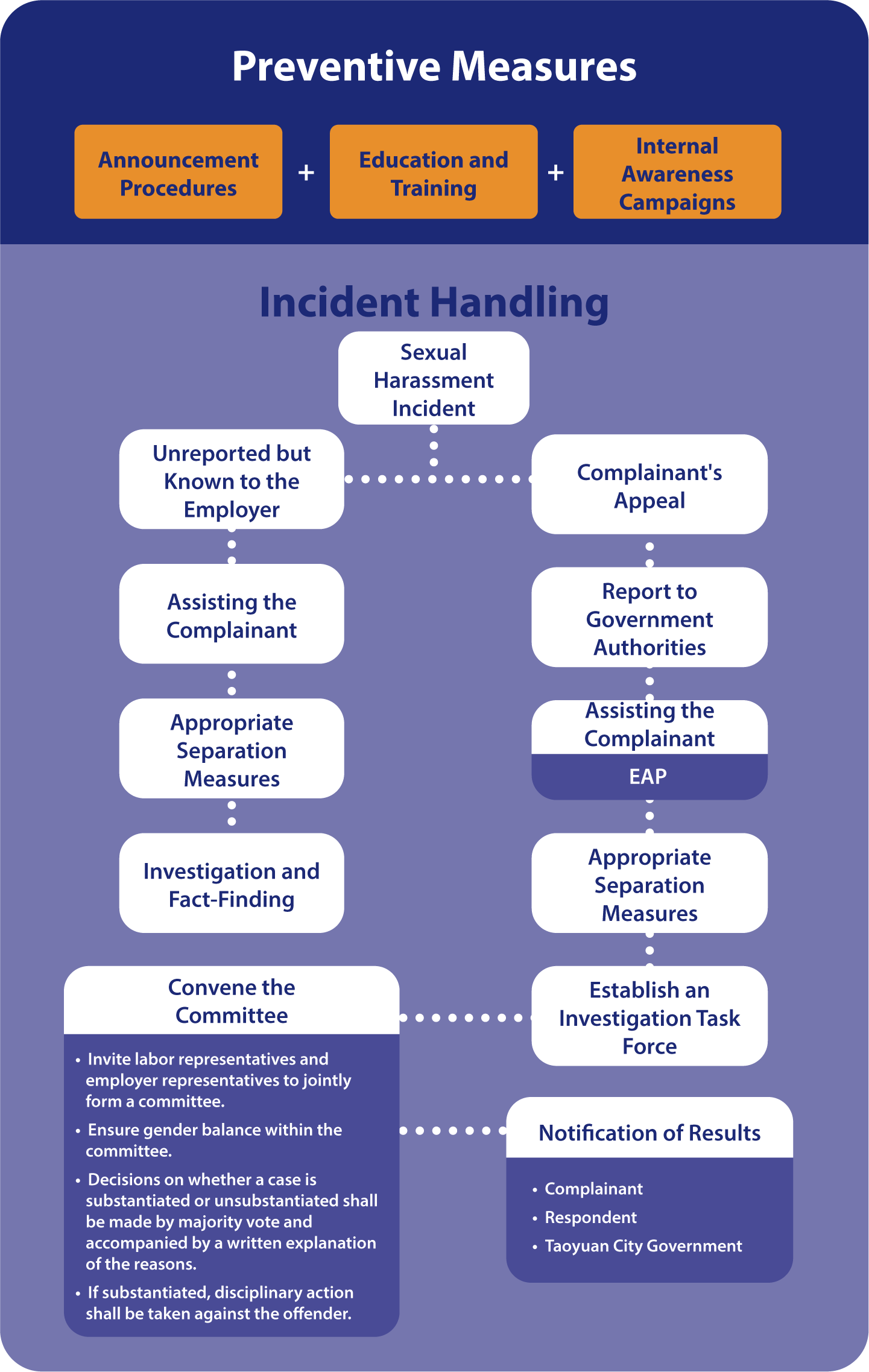
In recent years, discrimination cases at Quanta have primarily involved violations related to sexual harassment, with no incidents of discrimination based on nationality, race, or other factors.To promote a friendly workplace and foster an environment of mutual respect, Quanta has established a comprehensive procedure for handling cases that may raise concerns of sexual harassment or involve unlawful conduct in the workplace. This procedure covers proactive prevention, timely reporting and response, initiation of investigation processes, necessary disciplinary actions against offenders, and provision of psychological counseling channels for victims, ensuring a complete and thorough resolution process. If employees feel that they have been subjected to sexual harassment or any unlawful workplace violations, they may first contact extension 70695 (Please Understand Me Hotline) or send an internal email to 70695@quantatw.com or use other diverse communication channels (please refer to section 4.1.3 Talent Attraction and Retention: Two-Way Communication Culture and Employee Relations Management). The dedicated unit will handle the matter under the principle of confidentiality.
In cases of sexual harassment, the designated unit will immediately implement appropriate separation measures to ensure that the complainant and the accused are kept apart in both their work duties and daily interactions. For example, QCI engages professionals registered with the Ministry of Labor's Gender Equality Committee who are well-versed in relevant laws and handling principles to participate in joint investigations, ensuring that complainants are protected from retaliation. In certain facilities, investigations are conducted by the responsible unit. The investigation results are submitted to the committee for resolution. In addition to human resources and occupational safety and health personnel, labor representatives are also invited to participate jointly. If a sexual harassment incident is determined to be substantiated, depending on the severity of the circumstances, the penalties may include dismissal, demerit, reprimand, written and verbal warnings. Additionally, the perpetrator will be required to undergo educational training to prevent the recurrence of similar incidents. The Company also provides guidance on filing complaints with government authorities and respects the complainant's decision on whether to proceed with a formal report. The unit responsible will also follow up afterward on the complainant's emotional adjustment and whether the involved party has complied with company regulations to prevent recurrence.
| Complaint of Sexual Harassment Status | Complaint | |
|---|---|---|
| Substantiated | Unsubstantiated | |
| 2021 | 7 | 1 |
| 2022 | 9 | 6 |
| 2023 | 6 | 2 |
| 2024 | 19 | 1 |
| Subtotal | 26 | 10 |
| Total for 2024 | 36 | |
Human Rights Risk Management
Quanta is committed to safeguarding the fundamental rights and interests of all stakeholders, preventing any form of human rights violations, and actively fostering a work environment that respects human rights and protects individual dignity. The company continuously adheres to the "Universal Declaration of Human Rights" and the core conventions of the International Labour Organization (ILO) by establishing multiple internal systems and operational procedures. These include the "Non-Forced Labor Management Procedure", "Non-Discrimination Management Procedure", "Working Hours and Wage Management Procedure", and "Sexual Harassment Prevention Measures". The Company systematically promotes the implementation of human rights and risk prevention, and regularly reviews and updates its human rights-related policies to comply with the latest international standards and local regulatory requirements. To strengthen human rights risk management, Quanta has established the following institutional measures:
Human Rights Management Measures
- Management Scope: Employees and Suppliers
- Education and Training: Conduct regular human rights and labor rights training for employees, supervisors, and suppliers.
- Internal Audit and Risk Assessment: 透Conduct regular inventories of locations and supply chain risk hot spots, implementing systematic tools to monitor progress and drive improvements.
- Policy Implementation and Supervision: The implementation status of policies is reported annually to the Board of Directors, while each local site is responsible for daily monitoring to ensure compliance.
- Grievance and Reporting Mechanism: Multiple confidential channels are in place (such as on-site mailboxes and the headquarters grievance hotline: qci.csr@quantatw. com) to ensure stakeholders can safely express their opinions. Any form of retaliation is strictly prohibited. The following outlines Quanta's key human rights topics:
Diversity and Inclusion
Quanta is committed to creating a diverse, inclusive, and collaborative work environment, viewing employee diversity as a critical asset for corporate innovation and sustainable development. The Company respects all employees' gender, age, race, religion, nationality, sexual orientation, marital status, and physical and mental characteristics. It treats every employee and business partner with equality and fairness, ensuring respect and inclusion are upheld in the workplace. Quanta enhances employees' awareness of and respect for multiculturalism through education and training, while establishing diverse communication mechanisms to promote mutual understanding and support among employees, teams, and management. These efforts foster a corporate culture of open communication and collaboration. Quanta pledges to collaborate with stakeholders to promote the concept of diversity and inclusion, ensuring that every employee can work in a fair, safe, and respectful environment, thereby laying the foundation for the sustainable mutual prosperity of both the enterprise and society.
Prohibition of Forced Labor
Operations and suppliers at significant risk for incidents of forced or compulsory labor Quanta is committed to ensuring that all employees provide their services on a voluntary basis, with full respect for their fundamental freedoms, including the freedom to choose employment, resign, work overtime, and move freely. The Company has established corresponding policies and management procedures to uphold and protect these rights. To strictly uphold the policy prohibiting forced labor, human rights assessments have identified that the primary forced labor risk at Quanta's operational sites stems from migrant workers being required to pay recruitment fees. To address this, the Company manages labor dispatch firms and foreign migrant worker agencies in alignment with its zero-recruitment-fee policy and conducts thorough due diligence to ensure the policy is fully and consistently implemented. Quanta requires labor dispatch companies and foreign migrant worker agencies to sign the RBA Commitment Letter and to include explicit contractual provisions prohibiting the collection of brokerage fees from workers and any restriction on their freedom of movement. In cases of serious violations, the contract will be terminated immediately. If there are new foreign workers or short-term contract employees, Quanta conducts due diligence investigations immediately to ensure that they have not been charged any fees during the recruitment process. If it is discovered that recruitment fees have been charged, not only will the labor intermediary company be penalized as per the contract, but the fees will also be promptly refunded to the workers. At the same time, internal grievance channels are provided to migrant workers, encouraging them to immediately report to their supervisors and the channels if their personal freedom is restricted or if their personal documents are confiscated. An annual survey is conducted to assess the labor rights and interests of migrant workers. The 2024 internal survey results indicated no irregularities. In addition, RBA audits conducted across various factory sites found no instances of non-compliance related to forced labor.
Prohibition of Child Labor
In accordance with the "Human Rights and Working Conditions Policy", Quanta has implemented preventative measures across all its factories, which include training HR recruitment staff to enhance their ability to identify the age and identity of personnel. In 2024, the Corporate Social Responsibility Management Departments of QCI, QSMC, QCMC, and QMB conducted periodic inspections and audits of labor service company recruitment sites. Other sites also undergo RBA audits and annual internal audits. This is done firstly to ensure there are no instances of child labor or misuse of child labor, and secondly to fully identify underage applicants or employees. Upon the employment of new staff, Quanta also conducts verification of their identification documents. If it is confirmed that, despite rigorous checks, Quanta has inadvertently employed underage workers under the age of 16, Quanta has established necessary procedures for compensation and improvement measures. According to reports by experts from the International Labor Organization (ILO) and the "List of Goods Produced by Child Labor or Forced Labor" published by the U.S. Department of Labor, Vietnam's electronics and textile industries are identified as having potential child labor risks. Therefore, Quanta considers the risk of employing child labor and underage workers to be higher at QMB and QMH. The Quanta Group strictly manages this issue in accordance with the "Child Labor Management Procedures" and the "Young Worker Management Procedures".
In compliance with legal regulations, we have taken measures to protect the rights of the underage employees (e.g., student workers above the local legal minimum age but under 18) recruited across our various factories. Multiple departments have collaborated to regulate their registration, job positions, working hours, and health check-ups. We strictly prohibit these employees from working night shifts, overtime, or in hazardous positions. This is closely monitored and managed by the respective responsible units. In 2024, there were zero instances of child labor across all factory sites. No significant non-compliance issues related to child labor or underage workers were identified during customer audits or internal company audits.
Promotion of Training to Strengthen Human Rights Awareness
To respect and protect employees' fundamental human rights in the workplace, Quanta has established a comprehensive training framework to enhance awareness of personal rights, relevant regulations, and responsibilities. Diverse training programs covering topics such as human rights and psychological well-being are promoted across all factory sites. QCI, QSMC, QCMC, and QMB continue to conduct relevant educational training, covering topics such as corporate social responsibility, sexual harassment prevention, understanding forced labor, psychological health counseling, and case management.
New employees receive training on topics such as the prevention of forced labor, professional ethics, and employee responsibilities on their first day of employment and through mandatory online orientation courses. For existing employees, regular annual training is provided to strengthen their awareness of workplace ethics and the protection of human rights. In 2024, the employee training coverage rate at QCI, QSMC, QCMC, QMB, and QMH reached 100%, with a total of 31,951 training hours, underscoring the Company's strong commitment to human rights education.
For other factory sites that have not yet implemented comprehensive human rights and ethics training, the Company is also planning to gradually roll out related courses in the future. Guided by RBA standards, the Company aims to establish a consistent and comprehensive human rights protection system, thereby realizing the human-centered management philosophy across the group's global operational locations.
4.1.2 Talent Development
Guided by the principles of sustainable governance and business integrity and driven by the vision of "benefiting people through innovative technology," Quanta places strong emphasis on talent cultivation and development. The nurturing of core talent is regarded as a strategic priority. To help employees continuously enhance their skills and adapt to the mindset shifts required for strategic transformations at different stages, Quanta provides diverse learning and development programs. These initiatives ensure that employees and the organization grow in tandem, fostering sustainable talent development, strengthening innovation momentum, and enabling Quanta to remain at the forefront of the rapidly evolving technology industry-ultimately fulfilling its vision of sustainable corporate management.
Talent Development Strategy and Implementation Methods
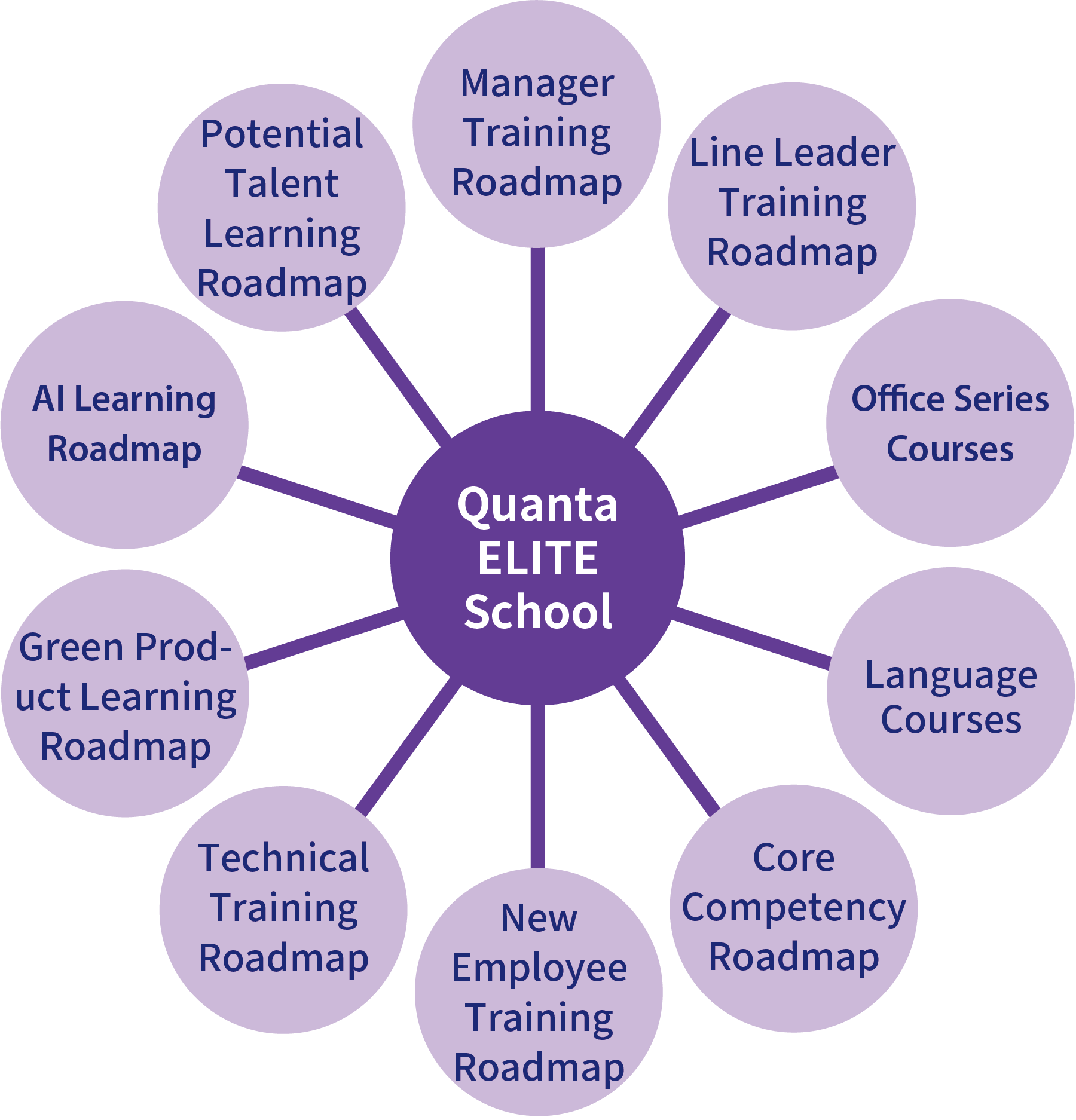
Quanta Computer Inc. (QCI) established the Quanta ELITE School (QES) to serve as a key driver in advancing human capital development. The school defines the essential competencies for talent, placing sustainable talent development at its core, and is committed to building a diverse and inclusive Sustainable Talent Ecosystem. Building on the "3R" principle-Re-think, Re-invent, and Re-learn-Quanta systematically cultivates talent with both core values and cross-disciplinary capabilities, thereby creating, enhancing, and strengthening the organization's overall effectiveness and competitiveness.
Quanta primarily divides its talent training objectives into two main directions: strengthening job functions and forward-looking talent development. On one hand, it enhances employees' current capabilities to ensure their competence in fulfilling existing job requirements; on the other hand, it focuses on the future by actively cultivating talent with strategic thinking and diverse functional skills to support the organization's continuous innovation and long-term development strategy.
1. Strengthening of Job Functions
In order to ensure that employees consistently demonstrate strong competencies in work execution, skill proficiency, and teamwork performance, thereby providing a solid foundation for stable operations and ongoing process optimization, QES has planned diverse training methods and courses. These are based on the five major academic domains-ELITE-and are designed according to employees' job roles and work attributes, career development paths, skill maturity, and the Company's core values and policies. The corresponding learning resources enable employees to progressively acquire the essential skills and professional knowledge needed to excel in their current roles, effectively supporting daily operations and departmental goals while providing a clear learning pathway for their future development.
- Expertise: Developing core competencies and technical research skills to help employees continuously learn and develop in different product fields
- Leadership: Developing management competencies and required management courses to help cultivate management talents in the Company
- Innovation, Thinking and Entrepreneurship: Innovation, Thinking, and Entrepreneurship are centered around the core ICE (Innovation, Creativity, Entrepreneurship) program-led by experts from institutions such as Harvard University and Stanford University-this discipline covers design, neuroscience, creativity, and entrepreneurship. It aims to cultivate employees' innovative knowledge, design thinking, and entrepreneurial mindset and capabilities. We are initiating a series of lectures to enhance our employees' proficiency in the application of artificial intelligence in various fields such as manufacturing, mobility, and healthcare. This initiative aims to cultivate diverse, interdisciplinary talent.
The learning themes and pathways of each discipline are designed based on varying job characteristics, required competencies, and levels. This ensures that every employee has access to suitable learning topics and development resources, enabling them to strengthen their professional skills, close skill gaps, sustain performance, and continue learning and growing. To provide a more diverse range of learning perspectives and formats, the internal courses offered include large-scale lectures, small to medium-sized seminars, problem-solving workshops, experiential team activities, classroom courses, online courses, blended courses combining practical exercises with classroom learning, and live-streamed sessions. Additionally, employees are encouraged to participate in external seminars, courses, and workshops to acquire the latest technological trends and meet individual learning needs related to their roles or positions.
2021-2024 Training Hours
| Gender | Employee Training Information | 2021 | 2022 | 2023 | 2024 |
|---|---|---|---|---|---|
| Female | Learning Hours | 398,441.4 | 369,794.8 | 343,176.1 | 523,033.4 |
| Total Headcount | 22,355.0 | 19,938.0 | 17,343.0 | 23,297.0 | |
| Average Annual Learning Hours per Employee | 17.8 | 18.5 | 19.8 | 22.5 | |
| Male | Learning Hours | 995,365.9 | 720,799.4 | 691,822.8 | 890,317.7 |
| Total Headcount | 46,285.0 | 38,431.0 | 31,437.0 | 37,576.0 | |
| Average Annual Learning Hours per Employee | 21.5 | 18.8 | 22.0 | 23.7 |
- Note 1: The scope of statistics covers all full-time employees of the Group, excluding dispatched workers, labor/service/contract workers, and interns.
- Note 2: Average Learning Hours = Total Learning Hours ÷ Number of Full-Time Employees
2021-2024 Training Expense
| Training Expense Information | 2021 | 2022 | 2023 | 2024 |
|---|---|---|---|---|
| Total Learning Cost (TWD) | 20,720,616 | 23,203,750.3 | 28,313,256.42 | 28,652,557.9 |
| Number of Full- Time Employees | 68,640 | 58,369 | 48,780 | 60,873 |
| Average Learning Cost | 301.87 | 397.53 | 580.42 | 470.69 |
- Note 1: The scope of statistics covers all full-time employees of the Group, excluding dispatched workers, labor/service/contract workers, and interns.
- Note 2: Unit of Learning Expenses: New Taiwan Dollar (TWD)
- Note 3: Average Learning Cost = Total Learning Cost ÷ Number of Full-Time Employees
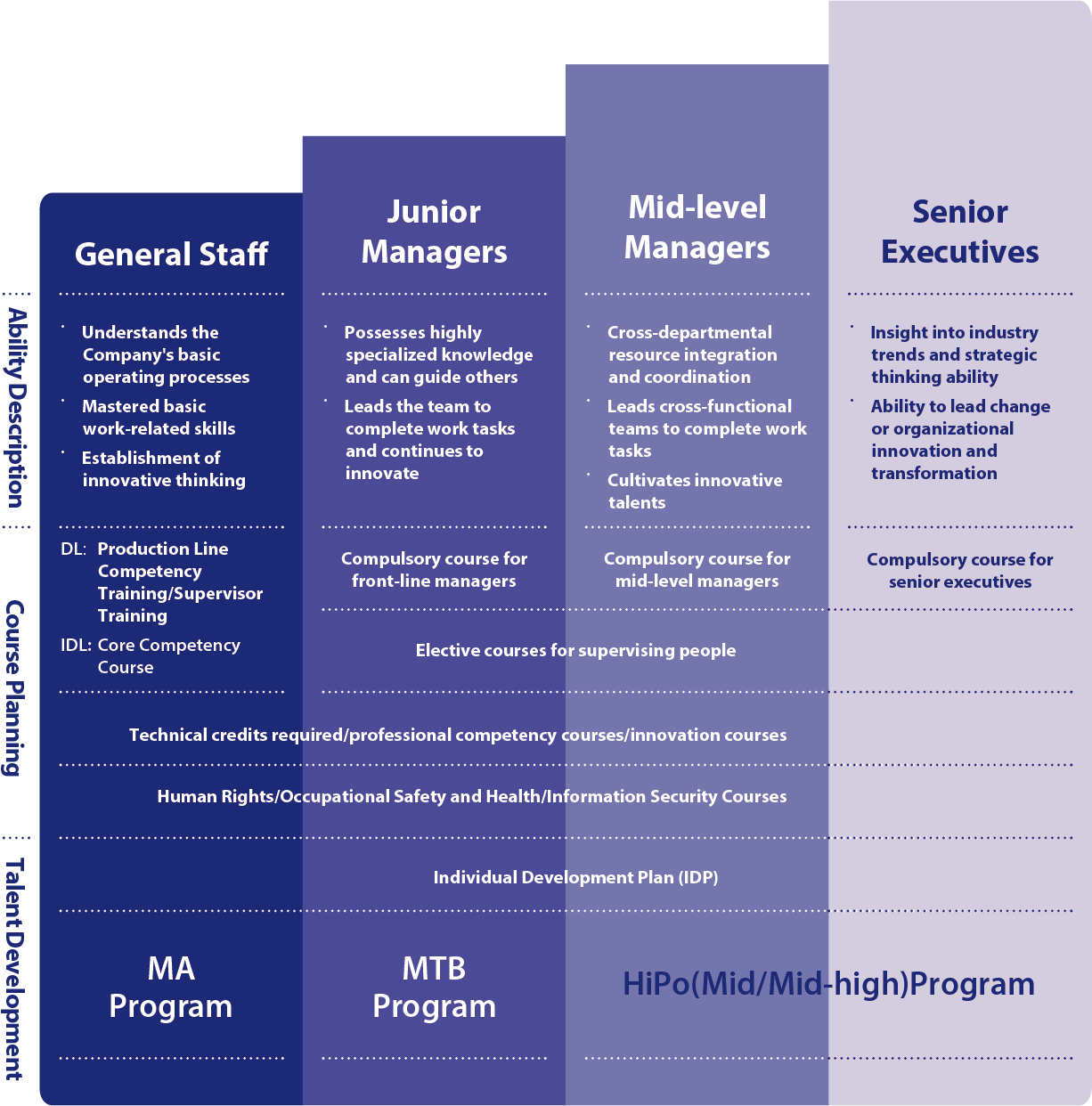
Training and Development Plans for Employees at Each Level
2. Forward-Looking Talent Development
In light of the organization's future development and market positioning needs, it is essential to consider employees' potential and adaptability for further talent cultivation. The goal is to assist employees in demonstrating a proactive attitude in professional skills, cross-departmental collaboration, and innovative thinking. This approach will facilitate their ability to assume higher-level or multifunctional roles in the future, thereby enhancing the overall competitiveness of the team and injecting sustained momentum into the organization's long-term development.
Employee future development, which supports the organization's growth strategy, encompasses five key directions:
| Development Strategy Direction | Description | Specific Achievements or Key Initiatives in 2024 |
|---|---|---|
| Learning Roadmap | Provide systematic training plans based on different job roles and attributes. | New Employee Training, Core Competencies, Management Skills, Technical Training, Production Line Supervisors, Green Products, AI Learning, Functional Units, and Other Learning Roadmaps |
| Individual Development Plan (IDP) | Through the Individual Development Plan (IDP) System, employees and supervisors collaboratively establish and track personal competency and career development goals. | A total of 12,552 IDPs were established, including 11,717 initiated by employees, 193 recommended by supervisors, and 642 generated from competency assessments. |
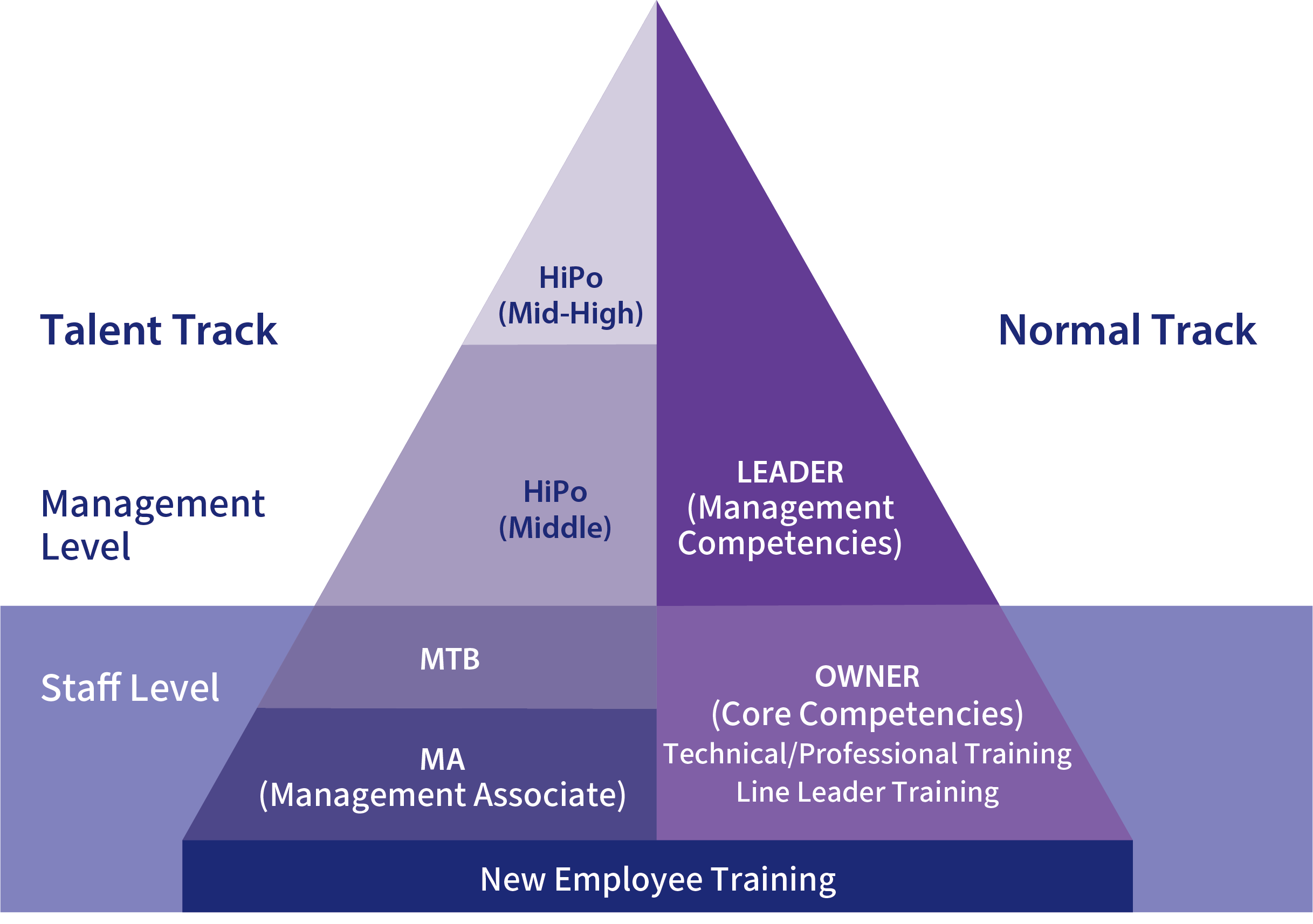
| Potential Talent Development Program | Building a Future Succession Pipeline and Key Talent Pool | Implement three key programs-MA, MTB, and HiPo-focusing on cultivating management associates and high potential talent. |
| Cross-Disciplinary Talent Development (AI-Oriented | Enhancing AI Literacy and Application Skills for All Employees through Quanta AI School |
The number of participants in the
generative AI-themed training sessions
reached:
|
| Experience and Knowledge Transfer | Encourage employees to serve as internal instructors, fostering a knowledge base and cultivating a learning culture. | The number of internal instructors reached 1,523 in 2024, reflecting a 12% year-over-year increase. The program aims to transform tacit knowledge into explicit knowledge while fostering mutual growth through teaching and learning. |
Training Roadmap for All Staff
Effectiveness Tracking and Evaluation
To ensure the effectiveness of training and the achievement of learning objectives, the Company has established diverse and concrete tracking indicators and regularly reviews the effectiveness of action plans. First, in terms of professional technical skill development, the average technical credit score for R&D personnel at all levels has reached over 20 credits. Additionally, the overall BU's technical credit achievement rate has averaged as high as 98%, reflecting strong learning commitment and results. Simultaneously, by analyzing the average training hours, we further grasp employees' participation levels and the distribution of learning hours, serving as a key reference for refining training strategies. Through these key management and tracking indicators, the Company gains a comprehensive understanding of learning outcomes, ensuring that talent development initiatives advance steadily and effectively support organizational operations.
Mechanism for Communication and Continuous Improvement
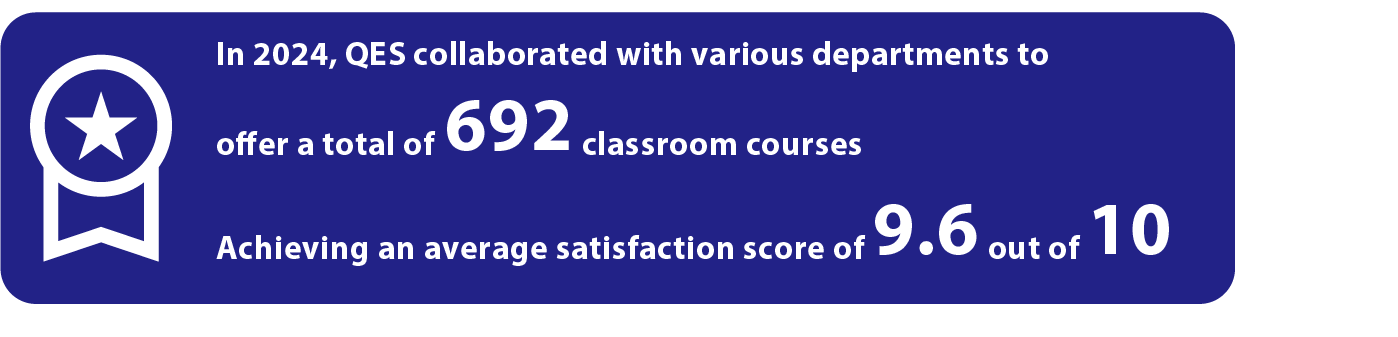
To ensure that the training content aligns closely with practical needs and continuously meets the professional growth expectations of both the organization and its employees, the Company conducts annual technical training needs interviews. Feedback is gathered extensively from professionals across departments, serving as a key reference for the planning of the annual technical curriculum. Simultaneously, a satisfaction survey is conducted at the end of each class. Through participant feedback, the course content is continuously optimized, and new course topics that better meet frontline needs are developed accordingly, thereby enhancing overall learning effectiveness and participant satisfaction.
Through systematic curriculum planning and rolling optimization, the Company has developed a demand-driven learning model that reinforces the alignment between talent development and organizational strategy, further driving sustainable corporate growth.
Highlight Story 1
MTB (Manager-To-Be) Program: Future Manager Development Program
A significant portion of Quanta's workforce consists of professional R&D talent, who are accustomed to focusing on enhancing technical expertise and delivering project outcomes. Typically, they begin formal training in areas such as team leadership and personnel management only after being promoted to supervisory roles. However, not all newly promoted supervisors transition smoothly into their new responsibilities. An internal review identified the following contributing factors:
- Focus on technical expertise only: Newly promoted supervisors are often occupied with heavy workloads or remain solely focused on honing their technical skills, leaving little time to pursue suitable management training. As a result, they enter the role with a weak foundation in management.
- Role transition challenges: Newly promoted supervisors shifting from individual contributors to team leaders may rely too heavily on past experience or personal traits, which can limit their effectiveness and hinder their ability to fully perform as managers.
- Lack of long-term development planning: The immediate supervisors of newly promoted employees may not engage in timely career planning discussions with them, leading to insufficient preparation before they assume managerial roles.
To address the aforementioned issues, the MTB Program was launched to ease the transition for newly appointed supervisors and to give potential future leaders an early understanding of the competencies and everyday challenges involved in managing people.
This program aims to achieve the following objectives:
- Proactive Development of Managerial Talent: Supervisors at all levels must possess the ability to identify potential talent and select employees with the potential to become team leaders, proactively strengthening their management capabilities in advance. Provide potential talents with an early understanding of the competencies required for supervisory roles and the daily management challenges, thereby strengthening their capabilities and expanding the Company's talent pipeline.
- Implementing the Concept of Sustainable Talent: Systematically cultivate potential personnel, strengthen the competency of managerial functions, reduce the rate of unsuitability after promotion to supervisory positions, and improve the retention rate of newly appointed managers. To reduce team management costs, enhance operational efficiency, and strengthen the Company's talent pipeline, thereby implementing the Company's sustainable talent development plan.
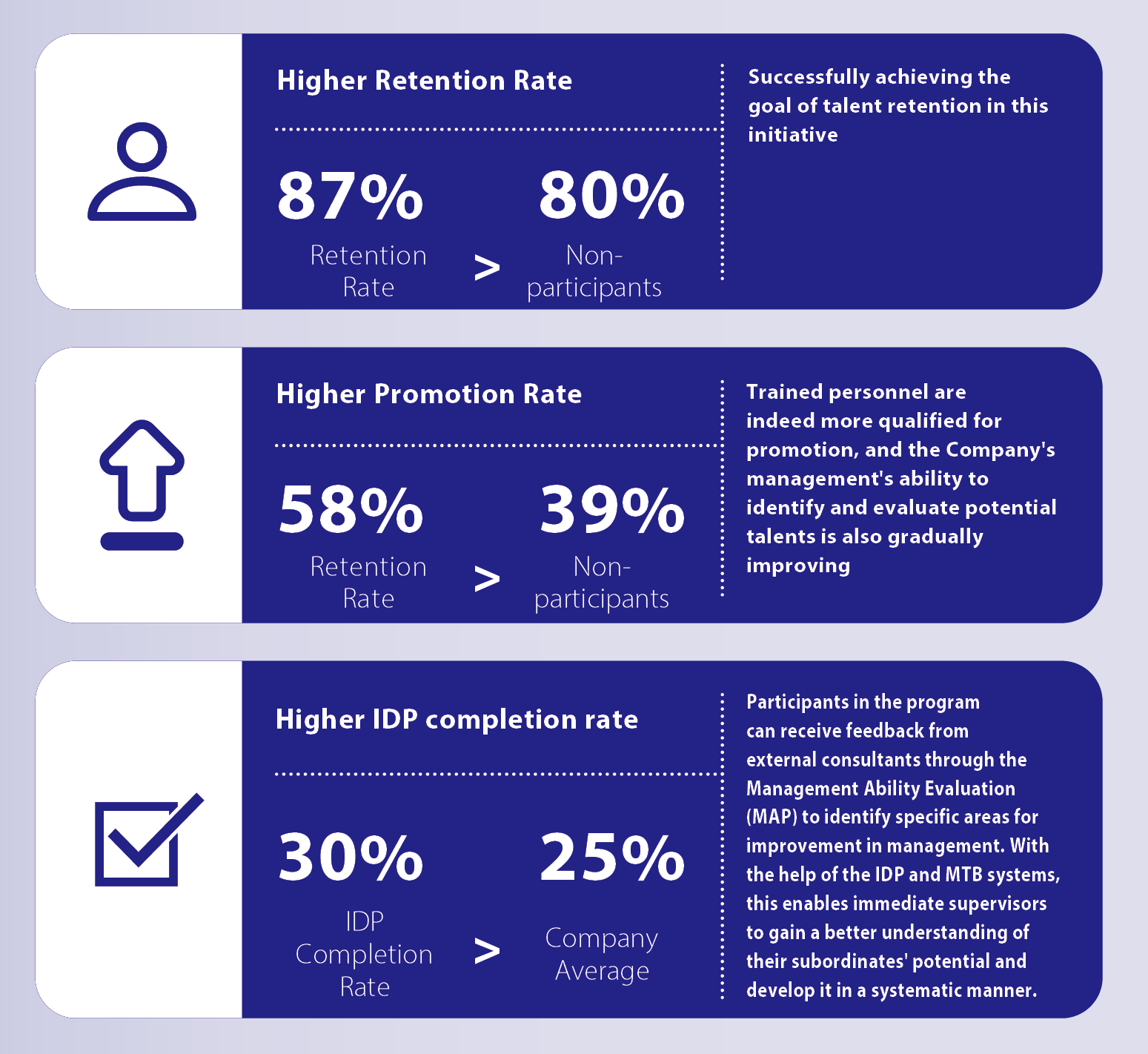
Based on the aforementioned objectives, employees identified as potential candidates will be categorized into two groups: those participating in the MTB Program and those not participating. Key metrics-including retention rate, promotion rate, and Individual Development Plan (IDP) completion rate-will be compared to monitor and evaluate program effectiveness.
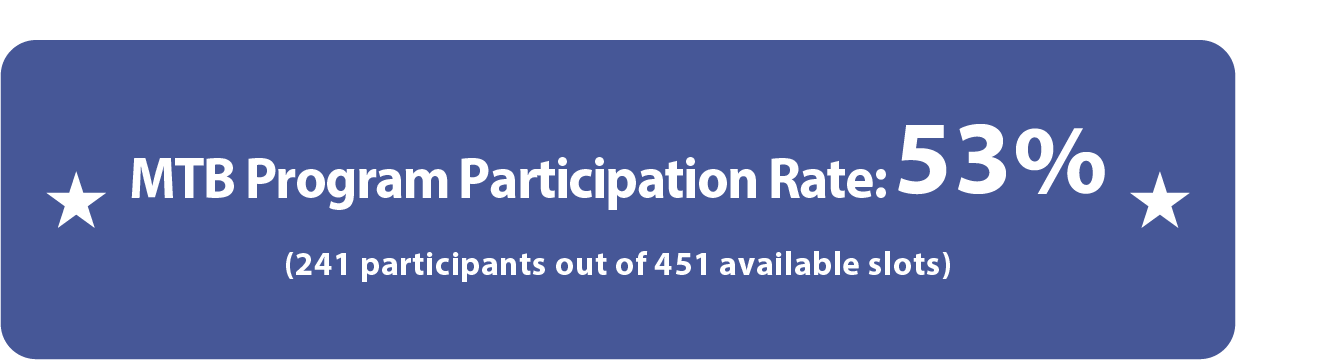
Quanta designates the MTB Program as a key annual initiative. Each year, the Human Resources Department works in collaboration with business units to identify and screen potential candidates. Following the confirmation and submission of candidate lists by each business unit, participants undergo training and management competency assessments. Based on the assessment results, tailored Individual Development Plans (IDPs) are formulated to support their growth. During the execution of the program, areas requiring improvement and refinement are documented, and more appropriate approaches are proposed. These recommendations are incorporated into the subsequent year's MTB Program to further enhance the plan's overall effectiveness.
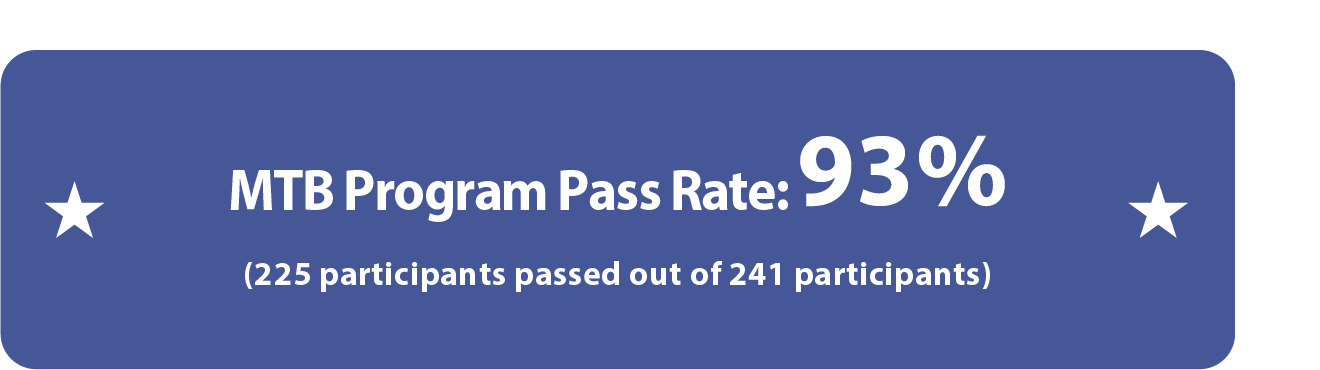
Quanta has spared no effort in talent development, dedicating substantial resources and personnel to the successful implementation of this program. Reviewing the training outcomes from its launch in 2020 through the end of 2024, the following remarkable results reaffirm the Company's conviction that the program plays a vital role in realizing its vision of sustainable talent development. The results of the effectiveness tracking are summarized as follows:
4.1.3 Talent Attraction and Retention
Quanta places great importance on talent development and sustainable competitiveness, striving to create a fair, transparent, and attractive workplace environment to support employee career growth and enhance the organization's talent retention capabilities. To implement principles of corporate governance and human capital management, Quanta has established a well-defined compensation decision making process, a regular performance evaluation system, and an employee assistance mechanism. By offering a market-competitive salary structure, implementing gender pay equity policies, and providing career development support, the Company reinforces the link between talent retention and sustainable corporate growth, cultivating a long-term partnership of mutual trust and shared success with its employees.
Compensation Policy and Decision-Making Process
To implement corporate governance and enhance the transparency and fairness of the compensation system, Quanta has formulated the "Remuneration Committee Charter" in accordance with relevant regulations and set up the "Remuneration Committee" as a functional committee under the Board of Directors, responsible for planning, reviewing, and recommending the compensation policies for directors and managers. Its core responsibilities include formulating and regularly reviewing performance evaluation policies, remuneration structures and principles; and, taking into account individual duties, performance, industry trends, and the Company's overall operating results, presenting well-founded compensation proposals to the Board of Directors for approval. These efforts aim to ensure that compensation arrangements remain reasonable and externally competitive, while aligning with the organization's sustainable development goals and meeting stakeholder expectations. For detailed procedures regarding the determination of directors' remuneration, please refer to Section 2.1.1 Board of Directors Operations.
For senior executives, Quanta formulates an incentive-based compensation plan by comprehensively considering job level, educational and professional background, expertise, and job contributions, in accordance with internal regulations and market conditions. It also incorporates the achievement of both annual and long-term performance objectives into the design of incentive-based remuneration packages. To align with the corporate sustainability strategy, Quanta has incorporated ESG related criteria into managers' performance evaluation indicators, covering aspects such as environmental impact, sustainable talent development, and corporate diversity and inclusion. These indicators are linked to the variable compensation system, with adjustment ranges of up to ±10%. The relevant salary and compensation plans are reviewed by the Remuneration Committee and then submitted to the Board of Directors for approval, ensuring procedural compliance, fairness in decision-making, and full adherence to applicable laws and disclosure requirements.
Quanta upholds the principles of fairness, compliance, and market orientation in its employee compensation system. The Company has established a competitive salary structure, with remuneration determined based on employees' educational background, professional skills, job responsibilities, and functional requirements, without discrimination on the basis of age, gender, religion, political affiliation, or union membership. In addition to the base salary, the Company also distributes year-end bonuses and employee incentives based on overall operational performance and individual achievements. Annual salary reviews are conducted each year to boost morale and strengthen talent retention. The Company's compensation design takes into account local legal requirements at each operational site, while integrating job competency needs and market salary benchmarks to establish fair and performance-driven remuneration standards. In addition to annual salary adjustments based on employees' months of service, structural salary increases have been implemented consecutively for three years since 2021 to address inflation and price fluctuations, thereby enhancing employees' quality of life and job stability. In 2023, additional salary adjustments were made in accordance with the Company's operational results and the domestic economic growth rate.
In addition, Quanta accrues year-end bonuses on a monthly basis. Following the completion of the annual financial statements, and if a surplus is available, the Company formulates a distribution plan by taking into account both the accrued allocation and overall corporate performance. The proposed plan is submitted to the Remuneration Committee for review and, upon approval by the Board of Directors, the bonuses are disbursed and reported at the shareholders' meeting. Employee performance evaluations incorporate not only key performance indicators but also comprehensive factors such as the practice of the Company's core values, operational and management capabilities, financial and business performance results, participation in continuous education, and contributions to sustainable development. These factors are used to determine the weighing and proportion of individual compensation distribution, thereby ensuring a reward system that is fully aligned with the Company's value-driven approach. Furthermore, all evaluations fully comply with relevant regulations in each operational location to safeguard employee rights and ensure fairness in compensation.
The number of full-time employees in non-supervisory positions and their average and median salaries in Taiwan are disclosed in accordance with the regulations of the competent authority. Relevant information can be found on the Market Observation Post System.
Principle of Equal Pay for Equal Work
Quanta is committed to fully upholding the principle of equal pay for equal work, ensuring that all employees-regardless of gender, age, race, religion, nationality, marital status, or any other personal characteristic-receive equitable compensation for the same positions and job responsibilities. Quanta strictly complies with international human rights standards and the relevant regulations of each operational site (such as the International Labour Organization (ILO) Conventions, the "UN Guiding Principles on Business and Human Rights", and the labor standards laws of respective countries). The Company has established a unified compensation system and conducts regular internal reviews to ensure both fairness and regulatory compliance. Quanta is committed to creating a diverse, inclusive, and equitable work environment. Through education and advocacy, the Company enhances all employees' understanding of equal pay for equal work and equal rights. Additionally, Quanta provides channels for grievances to ensure that any inequalities related to compensation are promptly identified, addressed, and remedied. The Company firmly believes that equal pay for equal work is a fundamental cornerstone for safeguarding employees' basic rights and one of the core values driving the sustainable development of the organization
Salary Structure Analysis
Ratios of Standard Entry-Level Wage by Gender Compared to Local Minimum Wage
Quanta defines all operational site factory workers as frontline personnel, with identical starting salaries for both male and female employees. Therefore, excluding variable compensation such as work bonuses, position allowances, and seniority increments, their salary-to-local minimum wage ratios are as shown in the table below.
Table of Ratios of Basic Salaries of Frontline Employees at Each Plant to the Local Statutory Minimum Wage
| Region | Taiwan | Mainland China | Southeast Asia | The Americas | Europe |
|---|---|---|---|---|---|
| Ratios of Standard Entry- Level Wage Compared to Local Minimum Wage | 1.13 | 1.01 | 1.03 | 1.79 | 1 |
Male-to-Female Employee Salary Ratio
The Company values gender equality and the principle of equal pay for equal work, and is committed to establishing a fair and market-competitive compensation system. According to statistics by job grade and region, the average base salary and total compensation level for female employees in 2024, compared to male employees of the same job grade, are presented in the following table. Overall, the Company maintains a relatively stable gender pay gap in fixed salaries across all management levels, with female employees earning approximately 88% to 94% of the salaries of their male counterparts. However, in terms of annual salaries for senior management positions, the average annual salary for female employees is only 80% of that for male employees, indicating that there may still be disparities in the structure of variable compensation (such as bonuses and profit sharing). Quanta will continue to foster a gender-friendly workplace culture, enhance transparency in its systems, and work toward building an inclusive human resources environment. These efforts aim to ensure that all employees have equal access to development opportunities and fair compensation under equitable mechanisms, thereby fulfilling the Company's sustainable commitment to gender equality and diversity and inclusion.
Performance Evaluation System
| Item | Rank | The Entire Group |
|---|---|---|
| Fixed Salary | Senior Management | 0.94 |
| Middle Management | 0.92 | |
| Junior Management | 0.92 | |
| Non-management Positions | 0.88 | |
| Annual Salary | Senior Management | 0.80 |
| Middle Management | 0.89 | |
| Junior Management | 0.88 | |
| Non-management Positions | 0.89 |
- Note 1: Calculation formula: Ratio of female-to-male salary and compensation = Female salary and compensation ÷ Male salary and compensation (Male = 1)
- Note 2: This table covers both direct and indirect employees and applies to the following plant locations: QCI, QSMC, QCMC, QMB, QMH, QMN, QMF, QMMC, and QCG.
To ensure that employees' work performance aligns with the Company's objectives and to reward outstanding talent. Quanta implements performance evaluations for all employees, ensuring that individual overall compensation and personal development vary according to personal performance. This merit-based approach rewards employees based on their achievements, allowing those who perform better to receive greater benefits. The implementation process of Quanta's performance management system is as shown in the diagram on the next page.
In addition to the performance evaluations required of all employees, Quanta places particular emphasis on high-potential talents such as Management Associates (MAs). During their training period, MAs undergo seven additional development progress reviews and performance assessments, jointly conducted by their direct supervisors, senior management, and the Human Resources department. If an MA's development falls behind the planned targets, additional guidance and support are provided to ensure that they realign quickly with the intended development path. To assist supervisors in engaging employees in performance discussions based on management by objectives, setting Individual Development Plans (IDPs), conducting performance interviews, and delivering constructive feedback, Quanta has designated management by objectives and performance evaluation as mandatory courses for frontline supervisors. These courses not only familiarize supervisors with the Company's performance evaluation processes and policies but also provide training on how to conduct effective performance interviews, deliver positive feedback, and plan performance development based on the current capabilities of team members. All Quanta employees, regardless of rank, participate in performance evaluations, achieving a 100 % coverage rate.
Two-Way Communication Culture and Employee Relations Management
Freedom of Association, Open Communication, and Collective Bargaining
With respect to fostering a two-way communication culture and managing employee relations, Quanta places great importance on open dialogue and labor-management collaboration, striving to create a work environment characterized by respect, transparency, and participation. In accordance with relevant labor regulations and its human rights policies, the Company actively protects employees' rights to freedom of association and collective bargaining, embedding these principles in its Human Rights and Working Conditions Policy. At each operational site, mechanisms such as labor unions or employee representative systems are established in line with local labor laws and operational practices to promote constructive communication between labor and management, thereby safeguarding employee rights and reinforcing organizational stability. As of 2024, three of Quanta's sites-QSMC, QMMC, and QMH-have established labor unions, providing employees with formal channels to voice concerns and engage in collective negotiations.
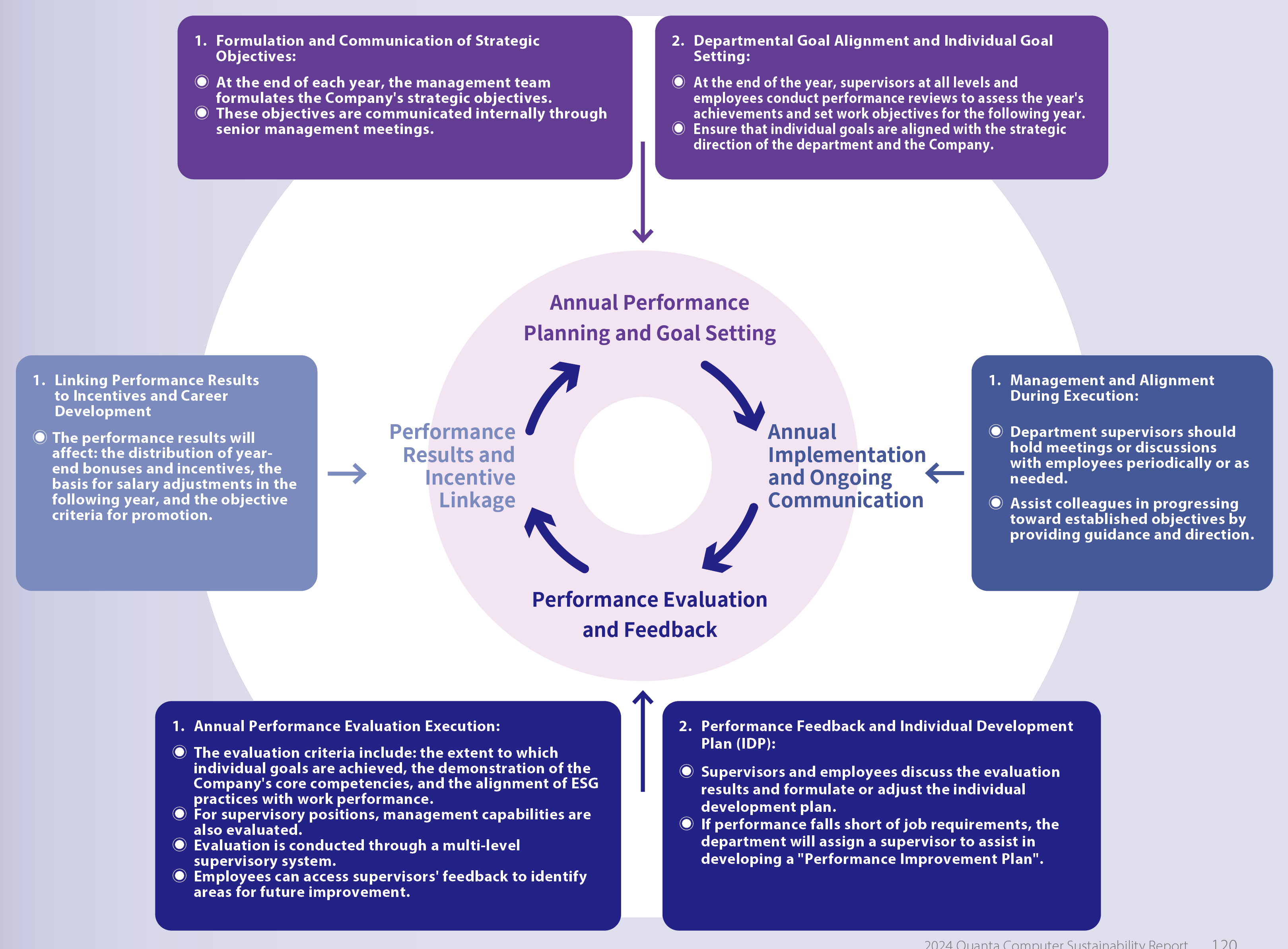
- On July 15, 2024, QSMC and its labor union signed a one-year collective agreement, a wage negotiation collective agreement, and a special collective agreement for female employees, aimed at safeguarding the rights and interests of both the Company and its employees.
- Since October 2021, QMMC has maintained an indefinite collective agreement with the local union organization FNSI. In accordance with the Mexican Federal Labor Law (Articles 399 and 399bis), annual negotiations are conducted to adjust salaries. The contract terms - including all salary and benefit provisions - are reviewed every two years, and each biennial update is subject to a staff referendum to safeguard the rights and interests of both the Company and its employees.
- On October 26, 2024, QMH entered into a corporate collective labor agreement applicable to all employees currently employed by the Company, including those in internship or probationary periods, as well as employees joining after the agreement's effective date. The agreement covers a broad range of employment-related matters, including salaries, bonuses, allowances, and salary adjustments; provisions on working hours and rest periods; protection of employment rights; assurance of occupational safety and health; employee welfare; social insurance and other forms of insurance; regulations concerning female employees; union activities; and the resolution of labor-management disputes.
- In 2024, a total of 29,081 employees across the three factory sites were covered by collective bargaining agreements, representing 93% of the total workforce at these sites.
In factory areas without labor unions, decision-making is jointly conducted by employee representatives and the Company. Employees' feedback and concerns can also be conveyed to management through elected employee representatives, thereby promoting harmonious labor-management relations.
- QCI holds labor-management meetings every three months, with labor representatives elected by the workforce. During these meetings, representatives present suggestions to management and discuss company policies and other related matters. The Employee Welfare Committee, elected by all employees, jointly determines the allocation of welfare benefits. For instance, it sets the fixed annual welfare fund provided to employees, allowing them the flexibility to use it for travel, fitness, or dining at the employee cafeteria. The committee also determines the monetary gifts for weddings, funerals, and celebrations, the amounts for funeral expenses, and the activities to be held as part of the annual events. This approach fosters employee participation in decision-making and enables them to shape their own welfare benefits.
- In compliance with Thai labor laws, factories employing more than 200 workers are required to establish a Welfare Committee and a Safety Committee. Since 2020, QMB has conducted labor representative elections every two years to fulfill this requirement. In August 2024, elections were held for a new term of the Welfare Committee. Regular committee meetings are convened every three months, serving as a platform for collective input and communication to support the Company's development.
- Since 2022, QCMC has elected a total of 11 employee representatives, each serving a four-year term. These representatives are responsible for gathering information on regulations or matters related to employees' vital interests, including employee welfare, labor safety and health, labor discipline, and complaints and suggestions. They promptly communicate these matters to the relevant company departments and leadership, monitor the effectiveness of follow-up actions, and provide feedback to employees.
As of the reporting year, the operational sites QMN, QMF, and QCG in Europe and the Americas had not yet established labor unions or formal employee representative systems. Nevertheless, the Company continues to provide multiple communication channels in compliance with local labor laws and its human rights policies. For further details, please refer to the section on "other diverse communication platforms" below. Going forward, Quanta will continue to assess appropriate employee participation mechanisms in line with the operational conditions and legal requirements of each location, ensuring that employees can engage in decision-making and voice their concerns in a fair, respectful, and open environment. This approach aims to foster mutual trust between labor and management and to advance the Company's goal of sustainable operations.
Other Diverse Communication Platforms
Quanta upholds the principles of respect, transparency, and participation, and is committed to building a positive and harmonious labor-management relationship as well as a culture of two-way communication. Through institutionalized and diversified communication mechanisms, Quanta strengthens mutual understanding and trust between the Company and its employees. Based on the operational characteristics and regulatory requirements of each region, it establishes appropriate communication platforms and representative systems to ensure the expression and response to employee opinions, thereby enhancing organizational cohesion and operational stability. The following outlines the primary approaches for employee communication and relationship management at each plant site.
- Taiwan Site: Multiple digital communication tools have also been established, such as internal e-newsletters, policy announcements, and the Camp mobile app. Additionally, operational directions are shared through senior management emails and face-to-face interactions to enhance the timeliness and interactivity of information.
- Mainland China Sites: A "Counseling Group" and a factory affairs hotline have been established to strengthen frontline management and provide workplace support.
- Thailand Site: Regular elections are held for the Welfare Committee and employee representatives to strengthen employee participation.
- Other Sites: Each location continues to establish employee communication mechanisms in compliance with local regulations and actual operational conditions. Local management units promote regional communication activities as needed and gather employee feedback through regular departmental meetings, employee forums, suggestion boxes, and online feedback channels. Feasible suggestions are consolidated and acted upon by management to ensure that employee input is appropriately addressed. This process progressively strengthens the overall communication culture and enhances organizational cohesion. For specific issues or policy adjustments, certain sites invite employee representatives to participate in consultation sessions, providing supplementary input for internal communication. Going forward, the Company will continue to encourage all regional sites to progressively enhance localized communication and feedback mechanisms in line with their operational scale and organizational characteristics, thereby strengthening the foundation of mutual trust between the organization and its employees.
QMB Welfare Committee Election Voting
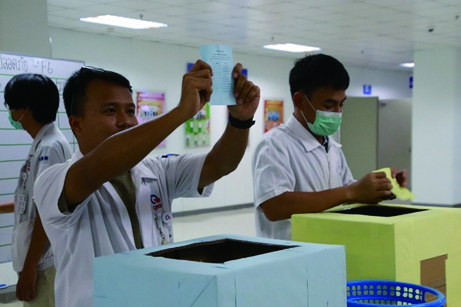
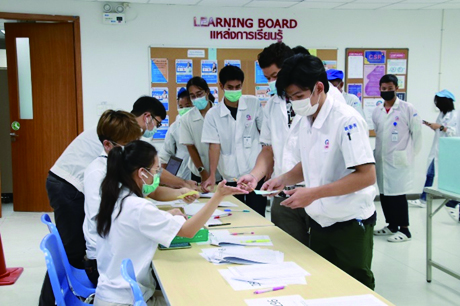
Quanta will continue to implement institutionalized and diversified labor-management consultation mechanisms, proactively listening to employees' voices, replacing confrontation with communication, and fostering cooperation through mutual understanding. This approach embodies the Company's core value of respecting and caring for employees. In 2024, all operational sites maintained stable and positive labor management relations with no significant disputes. This outcome demonstrates the effectiveness of Quanta's sustained investment in employee relations management and risk prevention, while reflecting the solid foundation of mutual trust and a culture of effective communication established between labor and management.
Employee Engagement/Satisfaction Survey
In terms of employee engagement and satisfaction surveys, Quanta periodically conducts assessments to better understand workplace experiences and expectations. At the Taiwan site, the 2024 survey showed that 80% of employees were willing to remain with the Company under the same conditions, with female employees reporting an even higher engagement rate of 86 %. To gain deeper insights into the experiences of high performing employees, an anonymous assessment was conducted for this group. The results indicated strong satisfaction with growth opportunities and alignment with work expectations, but lower levels of recognition and appreciation. In response, the Company introduced scenario-based training programs for supervisors to strengthen their ability to deliver positive feedback.
At the same time, separate questionnaires were developed for new-generation employees and their supervisors to capture perspectives and challenges from both sides. Based on these findings, Quanta designed cross-generational inclusion and communication programs covering both cognitive and practical aspects, with an emphasis on empathy and respect to bridge generational gaps and foster a collaborative and inclusive culture across the organization.
Quanta also continues to monitor the work experience and satisfaction of employees at its overseas plants. Through a variety of survey mechanisms, the Company collects authentic feedback on work environment, welfare systems, and corporate culture, using these insights to implement improvement initiatives. At QSMC, the most recent survey revealed that 85% of respondents were willing to remain with the Company, reflecting a stable workplace environment and strong sense of affiliation. At QCMC, employee satisfaction surveys are conducted twice a year, focusing on general affairs and living environment, and in 2024 overall satisfaction reached 95.47%. Based on survey findings, targeted optimization projects were launched to actively address employee expectations. At QMH, the Company collaborated with clients to implement the "Employee Voice Project," which revealed that 80% of employees intended to remain with the Company for the next six months, while 76% were willing to recommend Quanta to friends and family-demonstrating strong recognition of both workplace atmosphere and corporate reputation. At QMMC, an anonymous satisfaction survey conducted in 2024 showed that nearly 90% of employees expressed satisfaction with salary, benefits, and the overall work environment, highlighting the Company's commitment to providing a stable and supportive workplace across its global sites.
Summary Table of Relevant Complaint Channels
| Plant | Channel | Matters of Complaint |
|---|---|---|
| QCI | 70345 70345@quantatw.com |
General Complaint Hotline |
| 70695 70695@quantatw.com |
Sexual Harassment, Discrimination, and Workplace Misconduct | |
| 70885 | Employee Assistance Feedback Channel | |
| Caring Team | Assistance Team for Production Line Staff Feedback on Work, Supervisor Management, and Dispute Resolution | |
| qci.hr@quantatw.com | For internal and external personnel to provide feedback on human resources matters. | |
| QMMC | Official Mobile Number for HR Employee Relations | General Employee Grievance Channel |
| GA Opinion Mailbox (Physical) | General Employee Feedback Channel | |
| QMB | Suggestion Boxes at All Sites, Complaint QR Codes | Sexual Harassment, Discrimination, and Workplace Misconduct |
| CSR: Kaen.suvanan@quantaqmb.com | Handling Complaints Related to Corporate Social Responsibility | |
| QMH | CSR’s suggestion boxes | Handling opinions and complaints related to Corporate Social Responsibility |
| Hotline: 10540 | General Employee Grievance Channel | |
| Email: voice.csr@quantaqmh.com | General Employee Grievance Channel | |
| WeCome: Send a message to "Đội chăm sóc nhân viên" | General Employee Grievance Channel | |
| Online suggestion form | General Employee Feedback Channel | |
| Labour Union’s suggestion boxes | Union Complaint Channel | |
| QCMC | Caring Team, Wish Wall, Employee Suggestion Box, Human Resources | Handling General Feedback and Complaints |
| Emergency Hotline: 70885 | Matters Related to Company Employee Services | |
| Psychological Counseling Hotline: 17668 | Resolving and addressing issues related to employee well-being | |
| CSR Help Hotline: 023-88118168 ext. 12012,Email:varya.wang@quantacn.com | Handling opinions and complaints related to Corporate Social Responsibility | |
| QSMC | Hotline 70885 | Employee Assistance Feedback Channel |
| General Affairs Mailbox | Employee Feedback Channel | |
| Human Resources Service Station | Employee Feedback Channel | |
| CSR Hotline | Channel for Receiving, Handling, and Responding to Employee Complaints | |
| Company WeChat Account | Receiving employee feedback and related matters |
4.2 Workplace Health and Safety
Quanta is committed to creating a safe and resilient working environment, regarding occupational safety and health as a cornerstone of the Company's sustainable development. Through a systematic risk management mechanism and cross-factory preventive strategies, operational risks are reduced, employees' physical and mental well-being is safeguarded, and all employees are ensured stable development and growth in a safe and secure environment.
Quanta regards occupational safety and health as a core element of sustainable business operations. Adhering to the principle of "employee safety first", the Company has established a comprehensive occupational safety management system. This system enhances risk identification and accident prevention capabilities to effectively reduce workplace risks and the incidence of accidents. All operational sites strictly comply with local regulations and international safety and health standards, implementing comprehensive mechanisms covering hazard identification, risk assessment, accident prevention, and emergency response. Through regular facility inspections, operational risk controls, training programs, and a grievance response mechanism, Quanta ensures that all employees can work with confidence in a safe and secure environment. Going forward, Quanta will continue to enhance its occupational safety system and management effectiveness, striving toward the goal of "zero accidents." The Company is committed to fulfilling its promise of employee safety and promoting sustainable development in the workplace.
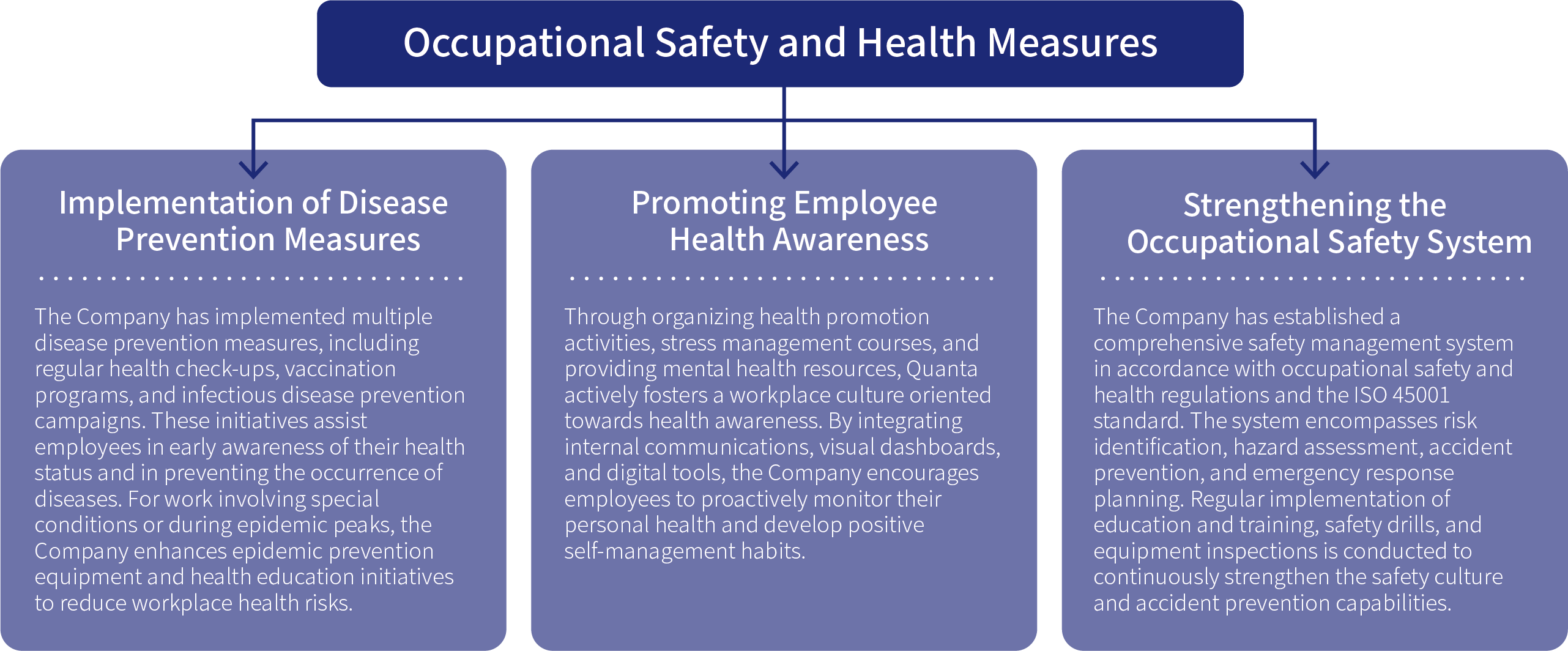
4.2.1 Employee Safety and Care
Quanta regards employee health and safety as fundamental to sustainable business operations. The Company continuously strengthens workplace protection mechanisms and health support systems to reduce occupational risks and promote employees' physical and mental well-being. This section covers occupational health services, employee health promotion, parental leave policies, and workplace welfare measures. These are managed and enhanced in accordance with international sustainability disclosure standards to provide comprehensive care for employees. Through institutionalized management, resource investment, and proactive advocacy, Quanta is committed to creating a safe, healthy, and friendly working environment, fulfilling the Company's responsibilities and commitments to its employees.
Employee Welfare and Care Mechanisms
To fulfill its sustainable commitment to employee health, safety, and quality of life, the Quanta Group has established an employee care system centered on the core principles of "comprehensive protection, local adaptation, and flexible response". This system encompasses statutory and supplementary insurance, retirement and savings plans, health management, maternity protection and childcare support, mental health care, and flexible working hours. In line with the legal requirements and practical needs of its global operational sites, the Group continues to promote a care mechanism that ensures consistency while allowing for flexible adjustments, enabling employees to receive appropriate and comprehensive support at every stage of their careers. Simultaneously, Quanta implements a variety of measures including workplace health promotion, occupational injury prevention, family-friendly policies, and the development of employees' mental and physical resilience. These initiatives not only safeguard the fundamental rights of employees but also strengthen a workplace culture characterized by safety, health, and inclusivity. The Company is committed to creating a flexible and people-oriented working environment, striving to be a globally trusted employer dedicated to sustainable development.
Sound Insurance and Social Security System
To fulfill its sustainable commitment to comprehensive employee lifecycle care, Quanta has established a robust insurance and social security system covering from entire span from employment to retirement. This system integrates statutory regulations with supplementary measures to provide a consistent and locally adapted insurance framework. In compliance with the legal requirements of each operational location, the Group provides full social insurance coverage for all employees, including labor insurance, health insurance, occupational accident insurance, unemployment insurance, and maternity insurance. Depending on regional requirements, coverage also includes housing provident funds and other government-mandated contributions. At the same time, Quanta offers group commercial insurance-including life, hospitalization, critical illness, and accident coverage-together with business travel insurance for overseas assignments, in order to strengthen employees' contingency response capabilities to unforeseen risks.
To further strengthen care, certain insurance coverage has been further extended to include employees' spouses, parents, and children, underscoring the Company's commitment to supporting families. Additionally, certain sites, such as QMMC, have established a salary savings scheme, while QSMC offers employer liability insurance, further enhancing long-term financial and career stability protection for employees. Quanta will continue to focus on "Risk Prevention and Future Protection" as its core principle, strengthening the implementation of the social insurance system and the flexible design of supplementary insurance. This ensures that all employees worldwide can develop steadily in an environment that is fair, secure, and dignified, thereby fulfilling the Company's responsibility as a sustainable employer.
Diverse Practices in Long-term Employee Security and Retirement Systems
To fulfill its commitment to long-term employee protection and retirement care, Quanta has established a retirement framework balancing global consistency with local adaptation, in accordance with the legal requirements of each operational location. The Company complies with legal requirements to provide statutory retirement protection measures for employees, including labor pensions, social insurance contributions, and management of retirement service years. Depending on the local system design, the Company offers parallel schemes for both the old and new systems or accumulates pension resources through a tripartite contribution mechanism involving the Company, employees, and the government. At certain operational sites, the Company provides retirement bonuses or extended benefits that exceed regulatory standards, supporting employees in smoothly transitioning and planning their retirement life at the end of their careers. In Taiwan, two pension systems - the old system and the new system - are provided in accordance with the "Labor Standards Act" and the "Labor Pension Act". In Mainland China, pursuant to the "Social Insurance Law", employees are enrolled in the "Five Insurances and One Fund." In the United States, in compliance with "Employee Retirement Income Security Act (ERISA)" and related federal regulations, qualified retirement plans - such as the 401(k) voluntary retirement savings plan - are offered. In Germany, the Company assists employees in participating in the state-managed public pension insurance system and, depending on individual circumstances, provides supplementary occupational pension schemes (Betriebliche Altersversorgung, BAV) to further strengthen retirement security.
Furthermore, Quanta will continue to regularly review and optimize its retirement systems in response to evolving labor policies across different regions, ensuring that employees worldwide can enjoy a stable, dignified, and secure standard of living after the conclusion of their careers.
Health Management
Quanta maintains a strong commitment to employee health by continuously developing an integrated health management system that encompasses physical and psychological well-being, and occupational risk prevention and control, thereby comprehensively enhancing workplace safety and employee welfare. Each operational site, in accordance with local regulations, operational risks, and practical needs, implements a range of measures covering preventive medicine, occupational health management, and psychological support. These measures include routine health examinations, vaccination programs, hypertension screenings, human factors engineering improvements, and psychological counseling services, providing a comprehensive care mechanism that ensures holistic protection and support throughout the entire employee life cycle. Health examination and health management records are classified as personal information. To ensure data security and prevent misuse, these records are safeguarded by the nursing staff at each plant site, thereby preventing data breaches or unauthorized access.
Starting from 2024, Quanta has, for the first time, expanded the disclosure scope of health management information to include more operational sites across the Group. As the relevant systems in certain facilities are still under development, their data is currently being consolidated and verified; therefore, full disclosure is not yet feasible. The Group will continue to optimize the information integration process to enhance the consistency and disclosure transparency of its global health management system. Relevant information will be continuously supplemented in future reports to address stakeholders' concerns regarding workplace health and to fulfill the Group's core responsibility as a sustainable employer.
1. Health Promotion and Preventive Medicine
To enhance employees' health literacy and the effectiveness of disease prevention, Quanta's various operational sites implement measures such as regular health checkups, hypertension screenings, vaccination programs, and nutrition and exercise guidance in accordance with local regulations and needs. Additionally, the Company integrates preventive medicine concepts and lifestyle interventions to strengthen the overall health management of all employees. For senior executives and high-risk employees, advanced health screening, individual health monitoring, and exclusive support programs such as critical illness insurance are provided.
| Site | Summary of Measures |
|---|---|
| QCI |
|
| QSMC |
|
| QCMC |
|
| QMMC |
|
| QMB | Quarterly health examinations are provided for employees who have completed one year of service, while those in special positions are required to undergo regular health monitoring. |
| QMH | Annual health check-ups were conducted for 28 employees, and 577 blood pressure screenings were performed, achieving an effective hypertension management rate of 84%. |
2. Occupational Health Management and Occupational Disease Prevention
Quanta places great importance on occupational safety and risk control. Based on the risk characteristics of job positions, a hierarchical management system has been established. For employees engaged in special operations, regular medical examinations, ergonomic assessments, and real-time adjustment measures are provided. Additionally, first aid training and emergency response drills are reinforced to ensure a safe work environment and safeguard employees' health.
| Site | Summary of Measures |
|---|---|
| QCI | Periodic medical examinations and hierarchical management are conducted for personnel engaged in special hazard operations. A total of 394 employees identified as working under overload conditions underwent risk-based improvements and supervisory interviews. |
| QSMC | Pre-duty, on-duty, and post-duty medical examinations were provided to 2,359 employees, with 15 employees diagnosed with contraindications being reassigned accordingly. |
| QCMC | Occupational health examinations were conducted for 597 employees; the examinations were carried out according to job-related risks such as noise and welding; these were performed by qualified medical institutions. |
| QMMC | Graded follow-up and medical referrals are conducted based on health risk indicators, with ergonomic assessments carried out for tasks involving material handling, visual load, and similar risk factors. |
| QMB | Personnel in special positions are required to wear protective equipment in compliance with regulations and undergo regular medical examinations and occupational safety training. |
| QMH | Injury incidents are addressed promptly, accompanied by risk assessments, with a strong focus on occupational risk prevention and control in the workplace. |
3. Mental Health Support and Employee Assistance Program (EAP) Services
In addition to managing physical health, Quanta has actively developed a diverse and comprehensive psychological support system to address the challenges of modern workplace stress and mental health, promoting a culture of holistic care. To enhance employees' psychological resilience and emotional adjustment capabilities, the Company employs a full-time psychologist and has implemented an Employee Assistance Program (EAP). This program offers a variety of services, including individual counseling, psychological risk assessments, stress management workshops, and group awareness sessions. The Company also continues to offer educational training courses related to topics such as emotional management and mindfulness-based stress reduction, guiding employees to enhance self-awareness through stress assessment scales and to develop effective stress management techniques. For management level personnel, relevant training courses are arranged to enhance their ability to observe, identify, and support employees' psychological well-being. In addition, daily communication and acts of care are encouraged to strengthen the workplace psychological support network.
The EAP system also offers free professional consultation services in psychology, legal matters, and finance, ensuring a comprehensive confidentiality mechanism to protect employees' privacy rights. For employees proactively identified by supervisors or the Human Resources Department as requiring further assistance, referral services and subsequent follow-up are provided to help employees restore their mental and physical well-being and successfully return to work and daily life.
| Site | Summary of Measures | ||||||||||||||||||||||||||||||||||||
|---|---|---|---|---|---|---|---|---|---|---|---|---|---|---|---|---|---|---|---|---|---|---|---|---|---|---|---|---|---|---|---|---|---|---|---|---|---|
| QSMC |
|
||||||||||||||||||||||||||||||||||||
| QMMC | Conducted psychological health risk assessments for over 400 employees, providing necessary support and intervention measures to enhance psychological safety and stress management abilities. | ||||||||||||||||||||||||||||||||||||
| QCI |
|
||||||||||||||||||||||||||||||||||||
4. Parental Leave and Maternity Protection System
Quanta continues to uphold its commitment to gender equality and a family-friendly workplace. At all global operational sites, the Company complies with local labor laws by providing statutory maternity leave, paternity leave, unpaid parental leave, breastfeeding leave, and other entitled benefits. Furthermore, Quanta actively promotes a range of diverse and flexible support measures, striving to create an inclusive workplace environment that enables employees to balance work and family responsibilities. Each factory site promotes flexible working hours arrangements based on practical needs,
establishes well-equipped childcare facilities, and provides health consultation and employee care services. These measures assist employees in maintaining stable career development through different life stages and help alleviate the conflicts between childcare responsibilities and work demands.
To strengthen maternal health and workplace respect, each site continues to enhance lactation facilities, such as the "Mommy Lounge", by equipping them with smart access control, dedicated refrigerators, and sterilization equipment. These facilities are supported by health risk assessments for pregnant employees, work adjustments, and medical assistance mechanisms, ensuring a safe, private, and compliant environment. This initiative not only underscores the Company's commitment to protecting the fundamental rights of pregnant and breastfeeding employees but also demonstrates its support for women's participation in the workplace.
Additionally, Quanta actively promotes health education and return-to-work support programs for female employees after maternity leave. The Company regularly organizes health seminars, policy advocacy, and individual care follow-ups to assist employees in smoothly balancing their family and workplace roles. These efforts gradually foster a gender-friendly and diverse inclusive organizational culture, embodying the Company's core values of people-oriented management and sustainable mutual benefit.
1.System and Leave Entitlements
| Region / Site | Explanation of Maternity Leave and Parental Leave |
|---|---|
| Taiwan (QCI) | Female employees: 8 weeks of fully paid maternity leave plus 7 days of prenatal check-up leave; Male employees: 7 days of fully paid maternity leave and prenatal check-up leave. Employees with children under the age of three may apply for parental leave and receive a six-month parental allowance. They may also request a reduction of one working hour per day. |
| China (QSMC/ QCMC) | Female employees: 198 days of maternity leave; male employees: 20 days of paternity leave; additionally, both are entitled to breastfeeding break and prenatal check-up leave (Chongqing: 10 days of official leave). Implement job risk assessments and position transfer protection measures. |
| Vietnam (QMH) | Maternity leave: 6 months; Paternity leave: 5 to 14 days. |
| Thailand (QMB) | Maternity leave is 98 days, of which 45 days are paid. |
| Mexico (QMMC) | Maternity leave: 12 weeks (6 weeks paid); male employees are entitled to 5 days of paternity leave; breastfeeding employees are entitled to reduce daily working hours by 1 hour within 6 months after childbirth. |
2.Facility Support and Environmentally Friendly Measures
| Site | Breastfeeding/Mommy Lounge Facilities and Services |
|---|---|
| QCI | 11 nursing rooms equipped with access control, refrigerators, telephones, storage cabinets, and handwashing and drinking water facilities; cleaned daily and inspected regularly. |
| QSMC | 10 "Mommy Lounges" equipped with access control, refrigerators, sterilization equipment, and reading materials; in 2024, 83 employees used these facilities. |
| QCMC | Nursing rooms with smart access control and comprehensive amenities. |
| QMMC | 3 "Mommy Lounges" with complete facilities; in 2024, 16 recorded uses. |
| QMB | 3 nursing rooms with refrigerators, cabinets, and sterilization equipment, managed by nurses 24 hours a day. |
| QMH | 1 "Mommy Lounge" with full breastfeeding facilities and reading resources. |
3.Status of Parental Leave and Reinstatement
| Fiscal Year 2024 | Male | Female |
|---|---|---|
| Number of Employees Eligible for Parental Leave | 8,139 | 4,182 |
| Number of Employees Applying for Parental Leave | 203 | 98 |
| Parental Leave Application Rate | 2% | 2% |
| Number of Employees to be Reinstated | 206 | 107 |
| Number of Employees Actually Reinstated | 198 | 74 |
| Reinstatement Rate | 96% | 69% |
| Total Number of Employees Returning to Work After Completing Parental Leave Within 2023 (C) | 182 | 62 |
| Total Number of Employees Remaining Employed 12 Months After Returning From Parental Leave in 2023 (D) | 178 | 46 |
| Retention Rate (D)/(C) | 98% | 74% |
- Note 1: According to local customs and regulatory requirements, only Taiwan and Germany have systems similar to the concept of "parental leave." This table does not include China, Southeast Asia, or the Americas.
- Note 2: In China and Southeast Asia, the primary leave types include maternity leave, prenatal examination leave, nursing leave, and caregiving leave.
- Note 3: In the Americas, maternity leave and paternity leave are the main types provided; however, due to cultural considerations, such information is regarded as personal and sensitive, making it inappropriate to require employees to disclose it.
4.Education and Support Measures
| Site | Execution Items and Outcomes |
|---|---|
| QSMC | In 2024, five specialized courses for female employees were conducted, covering childcare, gynecology, and legal knowledge, with a total of 323 participants. |
| QCMC | Promoted maternity and breastfeeding benefits policies to help employees understand the Company's system. |
| QMMC | Organized six women's health seminars covering infant nutrition and gynecological care, with a total of 16 participants. |
Flexible Working Hours
To accommodate the unique business characteristics of each plant and employees' work patterns, Quanta has introduced differentiated working systems that balance operational efficiency with flexibility needs. QCI is the only site within the group equipped with a research and development center. Considering the nature of the work and the flexible needs of R&D personnel, a flexible working hours system was implemented starting in 2024. Employees may choose to start work flexibly between 7:00 AM and 9:00 AM based on their individual commuting conditions and family needs. After completing eight hours of work each day, they may flexibly leave work between 4:00 PM and 6:00 PM. This measure aims to enhance work autonomy and work-life balance, thereby fostering overall employee engagement and satisfaction.
For other manufacturing-focused plants, due to the need to maintain stable manpower and continuity in production scheduling, the standard working hours system is maintained to ensure operational efficiency and consistent quality. Going forward, the Company will continue to review the appropriateness of the system in line with operational characteristics and workforce composition, and will gradually evaluate the selective introduction of flexible management models to balance production efficiency with employee well-being.
Furthermore, to demonstrate its care for employees and commitment to enhancing their quality of life, Quanta proactively adjusted its operations in 2024 in response to government-designated make-up workdays during the Lunar New Year holiday, granting all employees the day off and exempting them from make-up work. This initiative not only reflects the Company's people-oriented management philosophy but also supports employees in maintaining physical and mental well-being, strengthening family bonds, and achieving a healthy work-life balance, further enhancing the employer brand and fostering stronger employee engagement.
Health Promotion Activities
Quanta recognizes that cultivating good exercise habits forms a vital foundation for supporting employees' physical and mental well-being, strengthening workplace resilience, and fostering team cohesion. Accordingly, the Group continues to advance sports-centered health promotion initiatives, integrating facility development with thoughtfully designed activities to encourage employees to maintain regular exercise as part of their daily lives, thereby fostering a healthy, energetic, and engaging workplace culture.
Each operational site, based on the characteristics of local employees and cultural differences, promotes diverse sports support measures. These include establishing in-house fitness facilities and hiring professional coaches to offer fitness and aerobic classes. For example, in Taiwan, employees made an average of 8,281 visits per month to the gym in 2024, utilizing it as both a fitness resource and a means of stress relief. Quanta also encourages employees to form self-organized sports clubs, with 16 health focused groups encompassing activities such as ball games, dance, martial arts, and mountaineering. In Taiwan, approximately 800 employees actively participate in these clubs, reflecting strong engagement in wellness initiatives. Club activities allow employees to enhance communication and cohesion through shared interests, while continuously participating in self-directed health management activities.
To further promote the widespread adoption of healthy behaviors, Quanta organizes a variety of competitions and group activities, including the "Walking Challenge" (650 participants), "Fun Sports Meet", "Ball Games Competition", "Swimming Training Camp" (10 challenge sessions), and "Fitness Challenge", to enhance employee motivation and foster an interactive atmosphere. At the same time, certain sites have adopted the integrated "exercise and medical care" concept, combining physical training with health education programs to help employees enhance physical fitness through scientific exercise, prevent chronic diseases, and improve overall quality of life. Quanta will continue to expand the accessibility of sports resources and the diversity of activities, embedding exercise into employees' work and daily lives, the company advances its vision of fostering a healthy workplace and achieving sustainable well-being for all.
Other factory sites also offer comprehensive residential life support for employees living on company premises and away from their hometowns. They organize club activities to encourage interaction and foster connections, helping to support employees' physical and mental well-being.
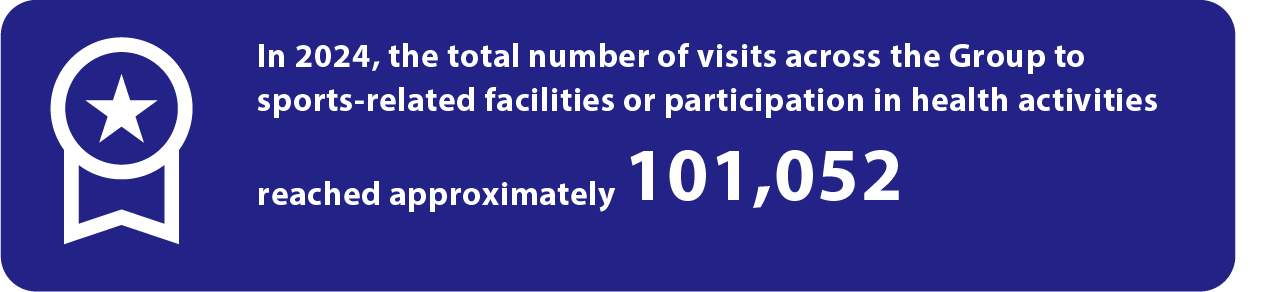
Highlight Story 1
Quanta Thailand Factory [QMB Soccer Tournament]
At Quanta's Thailand QMB Plant, health begins with happiness. In 2024, QMB actively responded to the Group's health promotion policy by organizing a soccer tournament. The event encouraged employees to exert themselves physically and improve their fitness, while also fostering teamwork and positive interactions through sports. A total of 230 participants took part in the entire event. On the field, colleagues ran with enthusiasm and showcased their skills, building both cardiovascular fitness and muscular endurance. The fast-paced matches and spirited cheers also provided a welcome release from the stresses of daily work.
This competition was not merely a test of physical ability, but also an extension of workplace culture, reflecting QMB's commitment to fostering both the physical and mental well-being of its employees. By regularly organizing sports activities, QMB has gradually fostered employees' exercise habits, embedded health awareness at the grassroots level, and made "health, vitality, and connection" an integral part of everyday workplace life. Quanta will continue to foster cohesive and uplifting workplaces by implementing localized, participatory health initiatives.
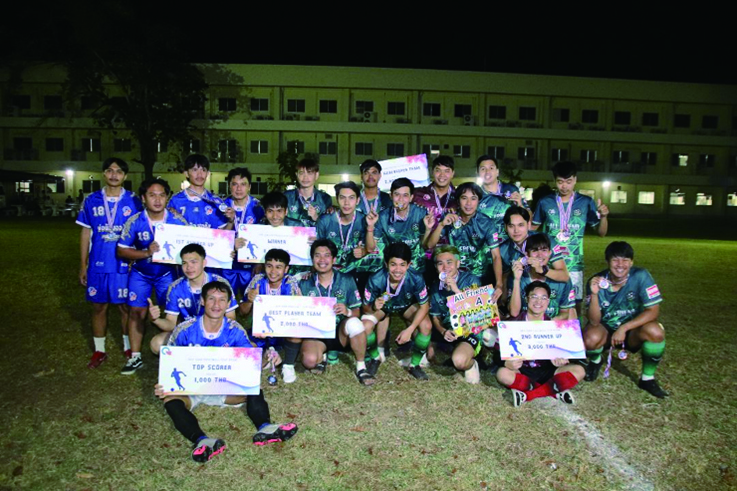
4.2.2 Occupational Health and Safety
Occupational Health and Safety Management Systems and Workers
Each plant within the Quanta Group has established comprehensive occupational safety and health policies and systems in compliance with local regulations and tailored to the specific risk characteristics of the industry. With the governance objectives centered on six core principles: compliance with regulations, risk assessment, full participation, enhanced communication, continuous improvement, and hazard elimination, the organization aims to comprehensively strengthen employee safety protection and risk response capabilities. This is achieved through institutionalized management, a dedicated occupational health and safety team, education and training programs, and inspection systems, all committed to realizing a workplace vision of zero disasters and zero accidents.
Status of Establishment and Implementation of the Occupational Safety and Health System
Quanta continues to promote the establishment and third-party certification of its Occupational Safety and Health Management System, strengthening operational safety and employee health protection. As of the end of 2024, most core manufacturing sites have obtained ISO 45001:2018 international certification, demonstrating Quanta's systematic governance capabilities and its commitment to continuous improvement. Manufacturing sites in Europe and the United States (such as QCG, QMN, and QMF) have been included in future implementation plans and will progressively work toward achieving international standardized management across all sites, in alignment with the operational characteristics and regulatory requirements of each location.
In terms of system implementation, Quanta has established a comprehensive occupational safety and health system and response mechanism in compliance with local regulations. The Company continuously conducts regular internal and external audits along with corresponding improvement actions. The Group has also implemented management systems in alignment with international standards such as ISO 45001, thereby strengthening operational resilience and enhancing risk prevention and control capabilities. In practice, the Group promotes the goal of "Zero Accidents" throughout the year and organizes project-based initiatives, such as "Guang-an" and "Chun-an," to strengthen employees' risk prevention awareness and foster a safety-oriented culture. Each factory site has established an Environmental Safety and Health Management Team or an Occupational Safety and Health Committee, responsible for coordinating and promoting the implementation of annual plans and systems. They enhance the effectiveness of autonomous management within each unit through regular awareness campaigns, hazard inspections, and cross-departmental meeting mechanisms.
In terms of emergency response, the Company has established an immediate work stoppage and hazard reporting system, empowering frontline employees to proactively halt operations and evacuate at the earliest signs of a hazard. This is supported by procedures for hazard identification, investigation, and on-site handling, fostering a culture of "immediate detection, immediate reporting, and immediate correction" to ensure rapid risk control and effective remediation. Factories such as QSMC and QMMC have also implemented a rapid EHS meeting mechanism at the managerial level, adhering to the principle of "same-day decision-making and swift execution", effectively enhancing cross-functional collaboration and operational efficiency. The Company has also introduced an incentive program to encourage employees and departments to engage in risk assessments, hazard reporting, and system optimization, thereby fostering a workplace safety culture with full participation.
Furthermore, to enhance employee involvement, the Company has established Occupational Safety and Health Committees at all major plants in compliance with regulations. These committees formally incorporate employee representatives into risk management and decision-making processes, putting into practice the principle of "people-oriented, safety first". The committee extensively collects feedback from frontline employees and contractors through regularly scheduled Occupational Safety and Health Committee management meetings, cross-departmental discussions, and employee satisfaction surveys. According to statistics from 2024, the participation rate of employee representatives in most factory sites exceeded 80%, peaking at 84%, indicating that the occupational safety mechanism has been effectively implemented and integrated with grassroots feedback. For sites with room for improvement, the Company will continue to review and assist committees in completing representative allocations. Participation awareness and governance effectiveness will also be enhanced through education and training, as well as incentive measures. Going forward, Quanta will continue to promote full participation and labor-management co-governance, comprehensively enhancing the effectiveness of occupational safety and health management as well as organizational resilience.
| Site | Number of Employee Representatives on the Occupational Safety and Health Committee | Total Number of Members on the Occupational Safety and Health Committee | Proportion of Employee Representatives on the Committee |
|---|---|---|---|
| QCI | 75 | 93 | 81% |
| QSMC | 158 | 277 | 57% |
| QCMC | 163 | 193 | 84% |
| QMB | 5 | 6 | 83% |
| QMH | 37 | 48 | 77% |
| QMMC | 28 | 49 | 57% |
| QCG | 5 | 8 | 63% |
| QMF | 0 | 12 | 0% |
| QMN | 0 | 0 | 0% |
Note 1: Calculation formula: Proportion of employee representatives on the committee = (Number of employee representatives on the Occupational Safety and Health Committee ÷ Total number of members on the Occupational Safety and Health Committee) × 100%
Non-Employee Workers: Contractors
Quanta upholds the principle of equal respect and protection for all non-directly employed workers, such as dispatched personnel, managers from dispatch agencies, canteen staff (including convenience store service personnel), cleaning staff, security personnel, outsourced vendors, and contractors (including those subject to hazard communication). The Company ensures that these workers enjoy the same fundamental rights and workplace dignity as directly employed staff. The Company requires all contracted vendors to comply with local labor standards and occupational safety and health regulations, and to has incorporated these requirements into the Group's supplier management system. Through regular audits of working hours management, wage disbursement, working conditions, and safety measures, the Company ensures that operational environments comply with local regulations and international human rights standards.
Additionally, Quanta has established a subcontractor management process and training mechanism, requiring contracting units to ensure thorough entry inspections and on-the-job safety training for external personnel. Training programs cover general safety education, radiation leakage prevention, protective operations, simulation testing, and other courses related to EHS regulations and operational safety matters. Taking the Asia region as an example, QSMC conducted 51 batches of contractor safety education and training sessions in 2024, covering a total of 10,170 participants (4,847 new entrants and 5,323 retraining participants), all of whom successfully passed the assessments. QMH organized 33 training batches for 1,248 participants (1,220 new entrants and 28 retraining participants). QCMC maintained a 100% pre-entry training rate for all contractor personnel entering the plant. For high-risk work categories, the Company will strengthen on-site supervision and documentation practices to ensure risks are effectively controlled and responsibilities are clearly defined. Going forward, the Company will continue to enhance transparency in labor management information across the supply chain, thereby elevating the overall standard of human rights due diligence governance throughout its operations.
2024 Proportion of Non-Employee Workers
| Region | Number of Non-Employee Workers | Total Headcount | Proportion of Non-Employee Workers |
|---|---|---|---|
| Asia Region | 14,872 | 72,897 | 20% |
| Americas Region | 494 | 7,255 | 7% |
| Europe Region | 110 | 259 | 42% |
- Note 1: The total headcount in this table includes regular employees (both local and foreign), contract workers (including dispatched and labor service personnel), and non-employee workers, all of whom are covered under the Occupational Safety and Health Management System.
- Note 2: Calculation formula: (Number of Non-Employee Workers ÷ (Total Number of Employees + Number of Non-Employee Workers)) × 100%
Hazard Identification, Risk Assessment, and Risk Control Mechanisms
To enhance the overall effectiveness of Occupational Safety and Health (OHS) management, all manufacturing sites within the Quanta Group have established comprehensive hazard identification and risk assessment systems. By implementing standardized procedures and incorporating multi-dimensional risk factors, the Group reinforces proactive prevention measures and strengthens systematic governance. The key implementation priorities are as follows:
- Standardization of Operating Procedures:Each plant conducts comprehensive hazard identification and risk level assessment based on the risk assessment procedures established by the Company. This process addresses three temporal dimensions (past, present, future) and three operational states (normal, abnormal, emergency) to ensure that risk identification is both proactive and comprehensive.
- Adoption of Diverse Assessment Tools:In practice, diverse methods such as the LEC method, risk matrices, and risk classification systems (e.g., scores of 0-39 for low risk, 40-59 for medium risk, and 60+ for high risk) are adopted to enhance the accuracy and operational applicability of risk categorization.
- Governance of High-Risk Operations:For operations identified as high risk, the Company formulates specific governance plans that clearly define responsible units, implementation timelines, budget allocations, and improvement measures. These plans are integrated into management audits and improvement tracking proc esses.
- Comprehensive Coverage of Risk Sources:The assessment scope encompasses workplaces, working environments, personnel (including contractors), equipment, and operational activities. It further addresses multiple dimensions of risk-psychological, physiological, chemical, physical, biological, and management system-related-to ensure a safe and secure overall working environment.
Implementation of Annual Reviews and Rolling Updates:
Each factory site conducts regular annual risk reviews and carries out rolling assessments for newly introduced operations or modified scenarios. For example, in 2024, QCMC conducted 845 risk identifications, of which 78 were classified as high risk. Improvement plans for all high-risk items were initiated in accordance with established procedures and remain under continuous monitoring. In the event of an accident, standard procedures are activated to carry out emergency responses and investigation. Corrective and preventive measures are then formulated, and the case is documented for use in future training and education.
Emergency Response Process Flowchart
To strengthen the Company's accident response and prevention mechanisms, it has established the "Accident Investigation and Handling Operation Manual". In accordance with the emergency response process, this ensures that, in the event of an accident, incidents are promptly reported and addressed, followed by systematic investigation and subsequent improvements. These measures aim to prevent escalation, minimize losses, and implement effective preventive actions to avoid the recurrence of similar events.
In the event of an incident within the operational area, immediate reporting shall be carried out in accordance with the "Accident Reporting and Emergency Response Procedures". The Occupational Safety and Health Unit will then conduct the investigation and implement subsequent handling measures. If an investigation identifies noncompliance in operational processes with applicable occupational safety and health regulations, corrective and preventive actions shall be implemented in accordance with the "Procedures for Environmental and Occupational Safety and Health Corrective and Preventive Measures". A continuous improvement mechanism shall also be established.
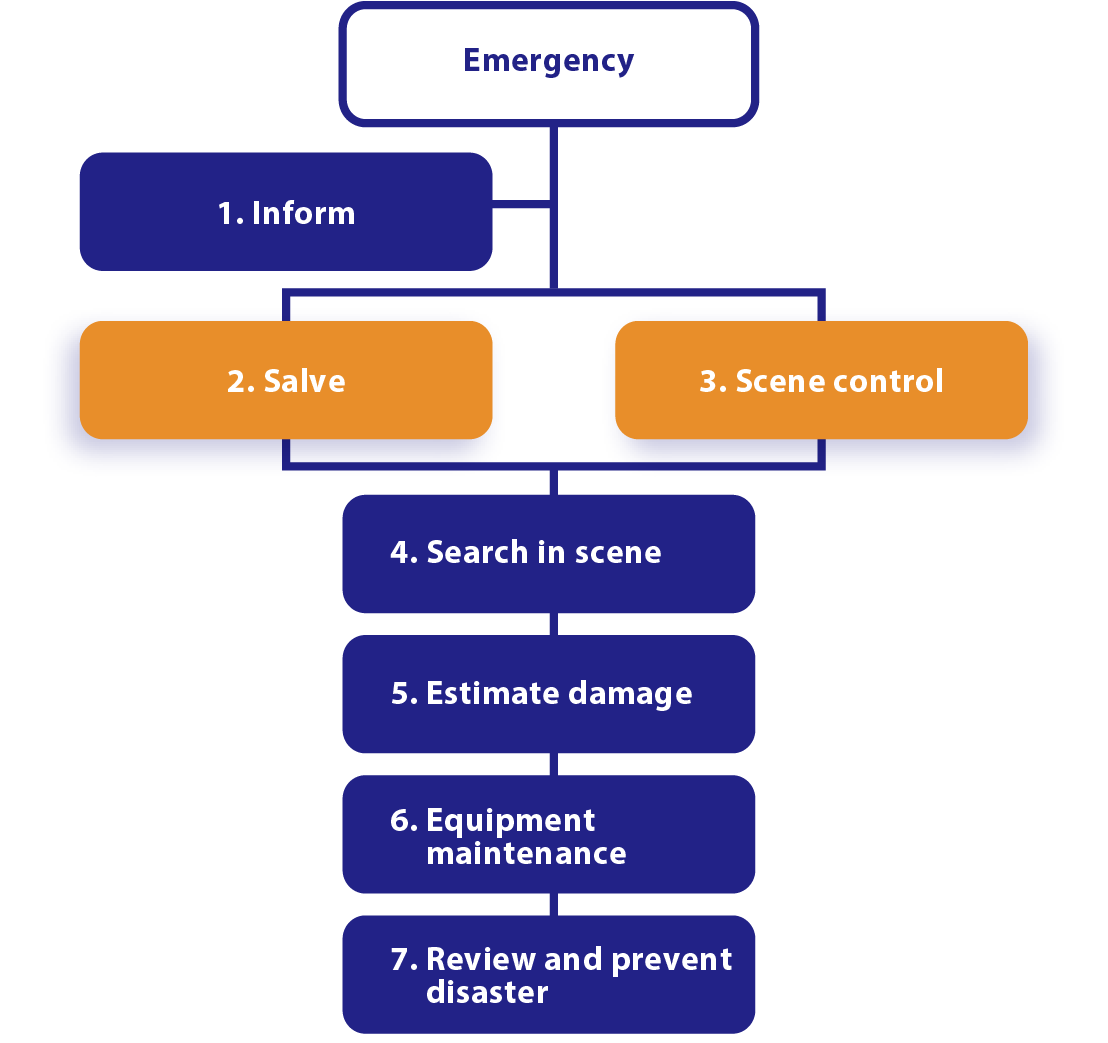
Annual First Aid Training and Emergency Response Drills
To strengthen workplace emergency response capabilities and disaster prevention measures, each site within the Group develops an annual fire drill and emergency response training plan in accordance with local regulations and operational risk profiles. By conducting diverse types of drills and first aid training, the Group ensures that employees acquire the essential knowledge and skills required for effective incident response and management. Each site develops an annual training plan and conducts first aid drills quarterly to ensure that employees possess the necessary emergency response knowledge and skills. The types of drills include evacuation, chemical spill response, fire response, equipment malfunction simulation, and high-risk operation accident scenarios. Certain sites, such as QSMC, further collaborate with contractors to conduct joint drills, strengthening cross-functional coordination and immediate response capabilities.
To prevent disaster escalation and strengthen emergency preparedness, QCMC, in addition to conducting routine drills, has further developed 20 specialized emergency response plans. It also provides training in first aid skills such as AED usage and CPR techniques to strengthen employees' abilities in self-rescue and mutual aid. It also educates employees on the proper use of protective equipment while raising awareness of risk identification and operational safety. QCI conducted 24 annual training courses for personnel in environmental, occupational safety and health, and energy management, totaling 886 training hours. In 2024, the Group provided emergency medical training to a total of 633 personnel.
Currently, the Group's European and American manufacturing sites have yet to establish a reporting system for drill and training outcomes. Moving forward, the Group will implement a comprehensive contingency framework enabling mutual support across plants, thereby enhancing disaster prevention, emergency response capabilities, and training effectiveness at all operational sites. Through institutionalized and systematic management, the Company fosters a sustainable safety culture characterized by rapid responsiveness, effective risk control, and practical operational capabilities.
Occupational Injuries and Diseases
Occupational health and safety are implemented through the occupational safety and health risk assessment management procedure, which involves the identification of hazards and the assessment of risks. The personnel responsible for conducting risk assessments are subject to internal auditor training by the occupational safety and health management system. These assessments primarily focus on preventing occupational injuries and diseases related to chemicals, machinery, electricity, equipment, and transportation. Among these, traffic accidents are the most frequent hazard. Employee awareness of hazards is reinforced through educational and promotional materials to reduce occupational injuries. In addition to causing personnel and property losses, occupational injuries can damage the corporate social responsibility reputation. Occupational health and safety management is crucial for the well-being of both the Company and its employees, and it can lead to direct or indirect economic benefits. Based on the 2024 annual assessments conducted across all factory sites, Quanta's operations are classified as having a low risk of occupational diseases. However, potential risk factors such as noise exposure and X-ray operations have nonetheless been identified. To mitigate related risks, Quanta continues to implement workplace environment monitoring and special health examinations for employees. Based on the results, graded health management measures are carried out to ensure workplace safety and to continuously strengthen occupational health protection. In 2024, no occupational disease cases or related incidents were reported. The findings and statistical summary of the occupational injury investigation are presented in the table below.
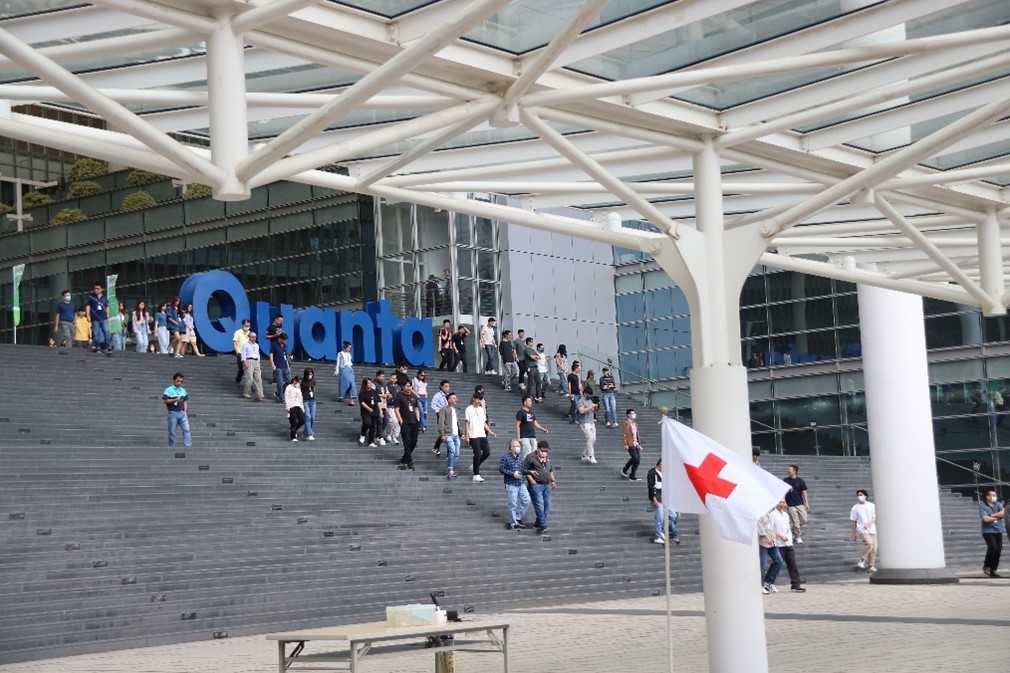
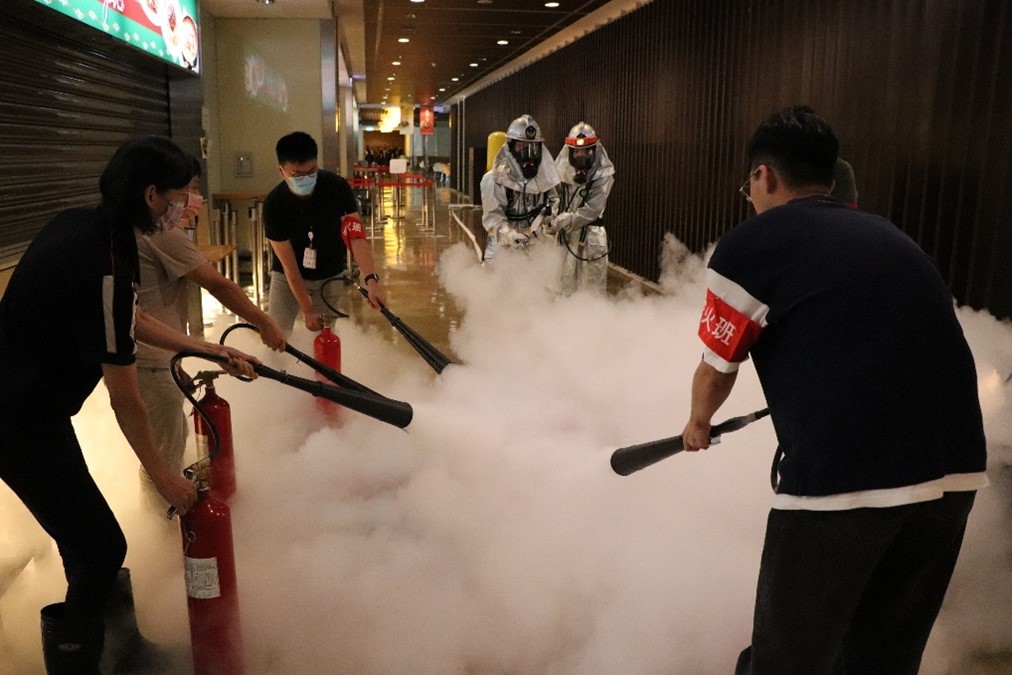
Occupational Injury Statistics for Workers and Non-Workers
| Worker Category | Workers | Non-Workers | |||||||
|---|---|---|---|---|---|---|---|---|---|
| Year | 2021 | 2022 | 2023 | 2024 | 2021 | 2022 | 2023 | 2024 | |
| Region | Asia Region | ||||||||
| Number of Personnel in Region | 84,764 | 66,536 | 53,319 | 58,025 | 4,384 | 4,413 | 4,197 | 14,872 | |
| Total Working Hours (A) | 169,287,440 | 132,690,448 | 106,389,680 | 116,164,888 | 8,730,288 | 8,797,280 | 8,350,480 | 29,944,216 | |
| Work related injuries | Type of Work-related Injury | Collision and crush injuries, falls, falls/sprains, compression/ crushing, mechanical injuries, object strikes, equipment injuries, and traffic accidents | Falls, entrapment, cuts, lacerations, mechanical injuries, object strikes, falls/sprains, equipment injuries, and traffic accidents | Crush injuries, collision, falls, falls/sprains, trip-and-fall injuries, compression/ crushing, mechanical injuries, object strikes, equipment injuries, and traffic accidents | Crush injuries, collision, falls, falls/sprains, trip-andfall injuries, lacerations, mechanical injuries, object strikes, equipment injuries, and traffic accidents | Falls, other injuries, falls/ sprains, equipment injuries, compression/ crushing, and lacerations | Falls, other injuries, falls/ sprains, equipment injuries, lacerations, and compression/ crushing | Falls, other injuries, falls/ sprains, equipment injuries, and compression/ crushing | Falls, other injuries, falls/ sprains, equipment injuries, and lacerations | equipment injuries, and compression/ crushing
| Number of Deaths Caused by Occupational Injuries | 0 | 0 | 0 | 0 | 0 | 0 | 0 | 0 | |
| Number of Severe Occupational Injuries (Excluding Fatalities) | 0 | 0 | 0 | 0 | 0 | 0 | 0 | 0 | |
| Number of Recordable Occupational Injury Cases (Total Number of Occupational Injury Cases) | 268 | 183 | 118 | 134 | 54 | 38 | 21 | 18 | |
| Fatality Rate caused by Occupational Injuries | 0 | 0 | 0 | 0 | 0 | 0 | 0 | 0 | |
| Severe Occupational Injury Rate | 0 | 0 | 0 | 0 | 0 | 0 | 0 | 0 | |
| Recordable Occupational Injury Rate | 1.583 | 1.379 | 1.109 | 1.154 | 6.185 | 4.320 | 2.515 | 0.601 | |
| Region | Americas Region | ||||||||
| Number of Personnel in Region | 89 | 1,523 | 3,025 | 6,761 | 0 | 0 | 182 | 494 | |
| Total Working Hours (A)/td> | 0 | 0 | 7,308,400 | 1,6140,168 | 0 | 0 | 439,712 | 115,3601.6 | |
| Work related injuries | Type of Work-related Injury | Occupational Injury Type Not Specified | Occupational Injury Type Not Specified | Mechanical injuries, sprains, cuts, and other injuries | Mechanical injuries, sprains, cuts, traffic-related injuries, repetitive motion strains, slips/trips/falls, contusions, and object strikes | None | None | None | Cuts, strains, repetitive motion strains, entrapment injuries, slips/ trips/falls, and object strike |
| Number of Deaths Caused by Occupational Injuries | 0 | 0 | 0 | 0 | 0 | 0 | 0 | 0 | |
| Number of Severe Occupational Injuries (Excluding Fatalities) | 0 | 0 | 0 | 0 | 0 | 0 | 0 | 0 | |
| Number of Recordable Occupational Injury Cases (Total Number of Occupational Injury Cases) | 0 | 0 | 0 | 38 | 0 | 0 | 0 | 64 | |
| Fatality Rate caused by Occupational Injuries | 0 | 0 | 0 | 0 | 0 | 0 | 0 | 0 | |
| Severe Occupational Injury Rate | 0 | 0 | 0 | 0 | 0 | 0 | 0 | 0 | |
| Recordable Occupational Injury Rate | 0 | 0 | 0 | 2.354 | 0 | 0 | 0 | 55.478 | |
| Region | Europe Region | ||||||||
| Number of Personnel in Region | 121 | 133 | 133 | 149 | 14 | 6 | 1 | 110 | |
| Total Working Hours (A)/td> | 222,640 | 244,720 | 244,720 | 274,160 | 25,760 | 11,040 | 1,840 | 202,400 | |
| Work related injuries | Type of Work-related Injury | Traffic accidents, slips, and falls | Finger entrapment injuries, stair sprains, and back impact injuries | Entrapment injuries | Trip-andfall injuries, sprains, entrapment injuries, and slips/trips | None | None | None | None |
| Number of Deaths Caused by Occupational Injuries | 0 | 0 | 0 | 0 | 0 | 0 | 0 | 0 | |
| Number of Severe Occupational Injuries (Excluding Fatalities) | 0 | 0 | 0 | 0 | 0 | 0 | 0 | 0 | |
| Number of Recordable Occupational Injury Cases (Total Number of Occupational Injury Cases) | 6 | 3 | 1 | 6 | 0 | 0 | 0 | 0 | |
| Fatality Rate caused by Occupational Injuries | 0 | 0 | 0 | 0 | 0 | 0 | 0 | 0 | |
| Severe Occupational Injury Rate | 0 | 0 | 0 | 0 | 0 | 0 | 0 | 0 | |
| Recordable Occupational Injury Rate | 26.949 | 12.259 | 4.086 | 21.885 | 0 | 0 | 0 | 0 | |
- Note 1: Calculation formulae: Total Working Hours = Number of Personnel in the Region × 8 hours/day × Number of Working Days in the Local Area per Year The fatality rate caused by occupational injuries = [Number of deaths caused by occupational injuries ÷ Total working hours] × 1,000,000 Severe occupational injury rate = [Number of severe occupational injuries (excluding fatalities) ÷ Total working hours] × 1,000,000 Recordable occupational injury rate = [Number of recordable occupational injuries (total number of occupational injury cases) ÷ Total working hours] × 1,000,000
- Note 2: The Americas region was still in the process of establishing relevant systems during 2021-2022 and had not yet commenced identification.
Employee Training and Certification Management
In terms of education, training, and certification management, each of the Company's manufacturing sites has established a comprehensive occupational safety and health training mechanism in compliance with regulations and internal policies. All new employees must complete pre-employment safety training, and current employees regularly attend refresher courses. The training content covers basic safety knowledge, first aid, chemical handling, high-risk equipment management, confined space operations, and special operations safety. It also includes radiation safety awareness training, industrial engineering safety training for public works, hazardous waste awareness training, summer heatstroke prevention safety training, and other related programs. Certification training and retraining are arranged according to job categories. For specific occupational hazards, such as high-pressure gas equipment, oxygen deficient operations, specific chemical substance handling, and forklift operations, operational guidelines are established, and paid external training is provided free of charge. The retraining rate for personnel holding required licenses and certifications is mandated by regulations to be 100%, ensuring workplace safety and effectively reducing the occurrence of occupational injuries.
In 2024, Quanta continued to strengthen the training systems for occupational safety and health, environmental management, and energy management across its operational sites. Based on regional regulations and practical needs, the Company planned and effectively implemented diversified courses. By integrating a digital learning platform, the Company provides online training and collects satisfaction feedback, while refining course design through needs assessments to enhance the relevance and effectiveness of educational resources, thereby fostering a safe and healthy working environment. In Taiwan, a total of 24 courses related to environmental protection, occupational safety and health, and energy management were conducted, with cumulative training hours reaching 886 and professional certification training completed for 364 participants. Throughout the year, a total of 10,933 participants attended occupational safety on-the-job training, effectively enhancing employees' safety awareness and operational competencies. In China, in addition to routine Level 3 safety education, training courses were precisely tailored to meet the needs of 104 departments, with a total of 87,298 participants. In the Southeast Asia region, six sets of occupational safety education courses were developed in accordance with local regulations. In 2024, a total of 160 participants completed the training, all of whom obtained certification. In the Europe and Americas regions, 21 physical courses and online training on 20 topics were offered, effectively broadening employee learning coverage and enhancing flexibility. Overall, each site within the Group implements occupational safety and health training tailored to its specific risk profile and regulatory requirements. Through institutionalized educational resources, the Group fosters a strong safety culture across the workforce and reinforces the foundation for a sustainable workplace.
Employee Absenteeism Rate
The Company values employee health and work-life balance. Through measures such as wellness programs, workplace care, and flexible working hours, it actively works to reduce absenteeism, thereby maintaining both operational efficiency and employee well-being. The average absenteeism rate for all full-time employees in 2024 was 2.88%, remaining below the benchmark for the electronics industry. This demonstrates the effectiveness of the Company's occupational safety and health management, as well as its employee support systems. An analysis of absenteeism causes indicated that the majority were attributable to general sick leave and family care responsibilities, with no significant cases of occupational injuries or outbreaks of infectious diseases. Going forward, the Company will continue to strengthen employee health management and psychological support resources, thereby enhancing overall attendance stability and workplace resilience.
Highlight Story 1: AI-Powered Detection Safeguarding Workplace Safety
QSMC Parking Lot Fire Detection and Alarm System
In response to the potential fire risks associated with the growing adoption of electric vehicles, Quanta launched the "F1 North Parking Lot AI Fire Detection and Alarm Project" in 2024 to improve the facility's fire early-warning capabilities and emergency response efficiency. The project focuses on the "Safe and Healthy Workplaces" aspect of sustainable development, addressing stakeholder concerns regarding the safety of employees and corporate assets. It deploys intelligent surveillance cameras equipped with flame, smoke, and temperature detection functions, integrated with the F4 Central Control Center software, to establish a real-time monitoring and rapid alert mechanism. Test results show that when a fire source is located approximately 20 meters from the camera, the system can activate audible and visual alarms within one second and simultaneously transmit the alert message and images to the central control center, fully meeting the design specifications. In addition to the construction of hardware facilities, the Environmental Safety Section conducted cross-departmental fire response education and training, as well as on-site drills, in December 2024 to enhance personnel's emergency response capabilities and familiarity with system operations. Through the parallel implementation of technological disaster prevention measures and institutional drills, the Company actively fosters a smart and safe workplace environment, promoting proactive early warning systems and a culture of occupational safety with full employee participation.
Highlight Story 2: AI-Powered Detection Safeguarding Workplace Safety
QSMC Garbage Room AI Monitoring and Alarm System
QSMC Garbage Room AI Monitoring and Alarm System
The project was led by the Engineering Team of the QSMC F1 Plant and was completed in July 2024, including system installation and functional testing. When the AI system detects that personnel are not wearing protective equipment properly, an abnormal alert window is immediately displayed at QSMC Garbage Room AI Monitoring and Alarm System Highlight Story 2: AI-Powered Detection Safeguarding Workplace Safety the F4 Central Control Center, accompanied by an audible alarm. The on-duty personnel verify the images and notify the on-site staff and area supervisors until the issue is resolved. The test results indicate that the system responds in real time and meets the design objectives, thereby enhancing real-time monitoring and error prevention mechanisms at the operational site.
Through the adoption of AI technology and the promotion of cross departmental collaboration, Quanta continues to implement intelligent monitoring and early warning systems in high-risk areas. This ranges from fire disaster prevention to the detection of personal protective behaviors, comprehensively enhancing workplace safety management effectiveness. In the future, the Company will continue to expand the application of intelligent occupational safety and health solutions, integrating data analytics and real-time feedback to drive the transformation from "passive management" to "proactive prevention," thereby fostering a safer, more transparent, and resilient workplace.